






Vol. 75, No. 1 (2026)
2026-01-05
CONDENSED MATTER: ELECTRONIC STRUCTURE, ELECTRICAL, MAGNETIC, AND OPTICAL PROPERTIES
COVER ARTICLE
CONDENSED MATTER: ELECTRONIC STRUCTURE, ELECTRICAL, MAGNETIC, AND OPTICAL PROPERTIES
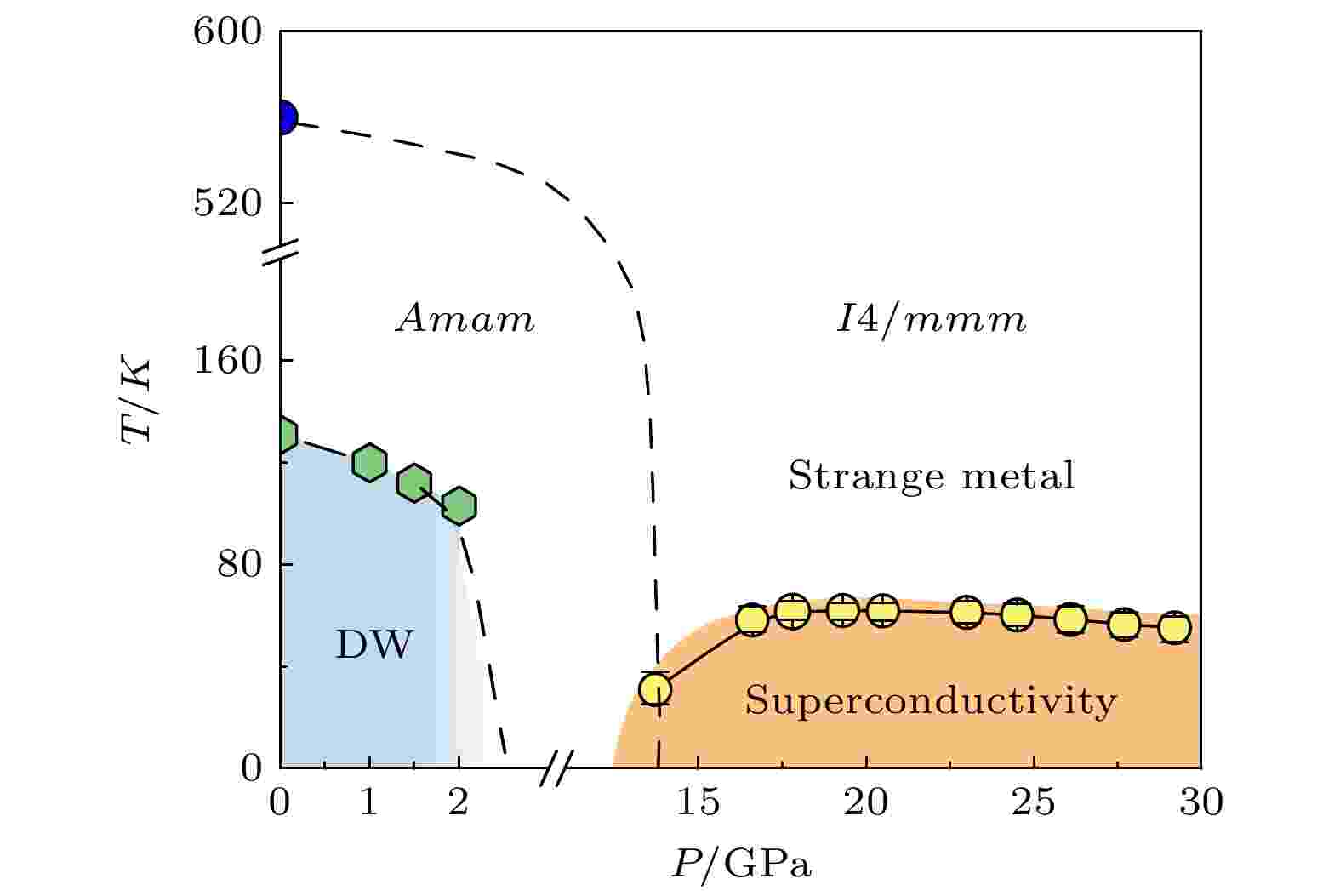
COVER ARTICLE
2026, 75 (1): 010704.
doi: 10.7498/aps.75.20251207
Abstract +


EDITOR'S SUGGESTION
2026, 75 (1): 010809.
doi: 10.7498/aps.75.20251367
Abstract +
Ferroelectric thin films and their device applications have drawn wide attentions since the 1990s. However, due to the critical size effect, ferroelectric thin films cannot maintain their ferroelectric properties as their thickness decreases to the nanometer size or one atomic layer, posing a significant challenge to the development of related nano-electronic devices. With a naturally stable layered structure, two-dimensional materials possess many advantages such as high-quality and smooth interface without dangling bonds, no interlayer interface defects, and the ability to maintain complete physical and chemical properties even at limited atomic thickness. Thus, it is gradually realized that two-dimensional materials are a good hotbed for the two-dimensional ferroelectricity. CuInP2S6, α-In2Se3, WTe2, and other intrinsic ferroelectric 2D materials have been reported successively while artificially stacked sliding ferroelectrics such as t-BN have also emerged, which expands the types of 2D ferroelectric materials and opens a new avenue for the further miniaturization and flexibility of ferroelectric electronic devices. This article reviews the recent research progress of two-dimensional ferroelectric materials, discusses their compositional characteristics, structural features and property modulation, and also prospects their application potential and future research hotspots.

EDITOR'S SUGGESTION
2026, 75 (1): 010705.
doi: 10.7498/aps.75.20251253
Abstract +

EDITOR'S SUGGESTION
2026, 75 (1): 010708.
doi: 10.7498/aps.75.20251455
Abstract +
Magnetic exchange interactions and their induced magnetic structures are crucial factors in determining magnetization switching. Dzyaloshinskii-Moriya interaction (DMI) is an asymmetric exchange interaction arising from spin-orbit coupling and structural inversion symmetry breaking, which is one of the key mechanisms to induce non-collinear magnetic order and chiral magnetic structures, including magnetic Skyrmion, vortex and chiral domain wall. These magnetic structures enable novel information proceeding devices with ultralow power consumption. More importantly, non-collinear magnetic order exhibits richer and more novel physical behaviors than traditional collinear magnetic structures. With ongoing exploration and research into magnetic materials, rare-earth transition metal ferrimagnetic materials such as CoGd, CoTb, and GdFeCo have emerged as notable candidates. These materials combine the spin-orbit coupling of rare-earth elements with the magnetic exchange interactions of transition metals, leading to ultrafast magnetization dynamics, tunable magnetic structures, and rich spin transport phenomena. These properties provide an ideal material platform for studying and manipulating DMI, demonstrating significant potential in designing future high-density magnetic storage and spintronic devices. This review systematically elucidates the microscopic physical origin of DMI, outlines the fundamental characteristics of rare-earth transition metal ferrimagnetic materials, and explores the coupling mechanisms between DMI and ferrimagnetic order. We introduce the fundamental properties of RE-TM systems and their applications in spin logic devices and magnetic memory devices. We focus on discussing the physical phenomena related to DMI in RE-TM systems, including the scaling relationship of DMI in RE-TM, DMI-related spin-orbit torque effects, and the principles and applications of skyrmion-based devices, which will provide both theoretical foundations and technical guidance for the future development of advanced spintronic technologies.
2026, 75 (1): 010401.
doi: 10.7498/aps.75.20250883
Abstract +

EDITOR'S SUGGESTION
2026, 75 (1): 010702.
doi: 10.7498/aps.75.20251158
Abstract +
Constructing van der Waals (vdW) heterostructures has emerged as an effective strategy for enriching the physical properties of two-dimensional materials and optimizing their optoelectronic performance. In this work, we systematically investigate the electronic properties and biaxial strain modulation of Janus MoSSe/g-C3N4 heterostructures with two distinct interfacial configurations—SMoSe/g-C3N4 and SeMoS/g-C3N4—by means of first-principles simulations. Binding energy comparisons and AIMD simulations are performed to determine the most stable stacking pattern of each type of the heterostructure. The analyses of the electrostatic potential and work function reveal that the intrinsic dipole of MoSSe layer and the interfacial electric field in the SMoSe/g-C3N4 heterostructure undergo a constructive superposition. This enhances the overall built-in electric field, which points from g-C3N4 layer to MoSSe layer, resulting in a type-I band alignment. In contrast, in the SeMoS/g-C3N4 configuration, the two fields oppose each other, leading to a net electric field directed from MoSSe to g-C3N4 layer. This leads to a type-II band alignment, which facilitates spatial carrier separation and significantly enhances photocatalytic water-splitting activity. Furthermore, this study also demonstrates that biaxial strain can effectively modulate the electronic band structures of both types of heterostructures. In particular, the SeMoS/g-C3N4 system exhibits a reversible transition between type-I and type-II band alignments under specific compressive (–4%) and tensile (+5%) strain states. The underlying mechanism is elucidated by the difference charge density calculations. This study provides theoretical insights into the role of interfacial and intrinsic dipoles combined with strain engineering, offering a viable route for designing efficient MoSSe/g-C3N4-based photocatalysts and optoelectronic devices.

2026, 75 (1): 010707.
doi: 10.7498/aps.75.20251394
Abstract +
This work investigates the magnetocaloric effect-based green magnetic refrigeration technology, with a focus on Ni-Mn-Ga Heusler alloy as a promising magnetic refrigerant candidate. To elucidate the role of Mn-rich composition in regulating the magnetic and magnetocaloric properties, a multi-scale computational approach integrating first-principles calculations and Monte Carlo simulations is adopted. This method enables a detailed analysis of how Mn atoms occupying Ni and Ga sites influence the microstructure, atomic magnetic moments, exchange interactions, and macroscopic magnetocaloric response of the alloy. The results indicate that Mn site occupancy critically affects the magnetic performance: the occupation of Ni sites reduces the total magnetic moment and Curie temperature, thereby reducing the magnetic entropy change; in contrast, Mn occupying Ga sites significantly enhances both the total magnetic moment and the magnetic entropy change. Notably, the Ni8Mn7Ga1 alloy achieves a maximum magnetic entropy change of 2.32 J·kg–1·K–1 under a 2 T magnetic field, which significantly exceeds that of the stoichiometric Ni8Mn4Ga4 alloy. Further electronic structure analysis reveals that Mn content variation modulates the density of states near the Fermi level and optimizes orbital hybridization and ferromagnetic exchange interactions, thus adjusting the magnetic phase transition behavior. Critical exponent analysis confirms that the magnetic interactions are inherently long-range and tend toward mean-field behavior with compositional changes. By establishing a clear “composition-structure-magnetism-magnetocaloric performance” relationship on an atomic scale, this work provides theoretical foundations for designing high-performance, low-hysteresis magnetic refrigeration materials.

EDITOR'S SUGGESTION
2026, 75 (1): 010803.
doi: 10.7498/aps.75.20251031
Abstract +
This research adopts an innovative method, i.e. proton irradiation technology, for realizing defect control in practical engineering yttrium barium copper oxide (YBCO) tapes, in order to improve the critical current density of YBCO high-temperature superconducting tapes in high magnetic fields. Based on the material irradiation terminal of the 4.5 MV electrostatic accelerator at Peking University, systematic irradiation experiments are conducted using 3 MeV proton beams on YBCO superconducting tapes at different fluence rates, successfully constructing high-density, low-dimensional controllable artificial pinning centers in the high superconducting tapes. This defect engineering significantly suppresses the flux creep phenomenon and enhances the pinning effect by creating low-energy pinning sites for flux lines, thereby significantly weakening the inhibitory effect of external magnetic fields on critical current (Ic). Comparative analysis of superconducting tapes before and after irradiation is conducted, including superconducting transition temperature, superconducting critical performance, and dependence of critical current density on magnetic field. As the irradiation dose increases, high-density point defects (vacancies, interstitial atoms, etc.) and a small number of vacancy clusters are implanted inside the superconducting tape, resulting in a corresponding decrease in the superconducting phase. Therefore, as the dose increases, the orderliness of the superconducting phase in the superconducting tape decreases sharply, leading to a gradual widening of the superconducting transition temperature zone. By measuring the hysteresis loops of samples irradiated with different doses of protons and calculating the critical current density Jc based on the Bean model, the experimental data show that under irradiation conditions with a fluence rate of 8×10¹⁶ p/cm2, the critical current of the sample under extreme operating conditions of 4.2 K and 6.5 T achieves an 8-fold breakthrough improvement. Meanwhile, the maximum improvement factors in critical current density at 20 K and 5 T and 30 K and 4 T are also 5.5 times and 4.8 times, respectively. The logarithmic curve is fitted using the Jc ∝ B –α power exponent model, with the power parameter α values of 0.276, 0.361, and 0.397 for the variation of critical current density with magnetic field in three temperature ranges of 4.2 K, 20 K, and 30 K, respectively. This indicates that the superconducting tape irradiated with protons will form more effective strong pinning centers at lower temperatures, reducing the dependence of the critical current density of the superconducting tape on the magnetic field. This performance breakthrough significantly enhances the application potential of high superconducting tapes in low-temperature and high magnetic fields environments, especially in frontier fields such as particle accelerators and fusion reactors, where there is an urgent demand for high-performance superconducting magnets. This work confirms that the proton irradiation technology can efficiently optimize critical performance through defect engineering without changing the existing preparation process of YBCO tapes, thereby providing a highly feasible and process-compatible technical path for realizing the practical performance control of superconducting materials.

EDITOR'S SUGGESTION
2026, 75 (1): 010804.
doi: 10.7498/aps.75.20251089
Abstract +
Understanding the intrinsic correlation between helium concentration and the evolution of defects as well as mechanical properties in low-activation steel on an atomic scale is crucial for designing fusion materials with excellent resistance to swelling and embrittlement. This study investigates the effect of helium concentration on single-crystal iron through molecular dynamics simulations, thereby clarifying the mechanisms by which helium concentration affects helium defect evolution, mechanical properties, and plastic deformation behavior of low-activation steel on an atomic scale. Models of body-centered cubic (BCC) iron with different helium concentrations (0.5%–4.5%) are established. Wigner-Seitz cell analysis and cluster clustering methods are employed to track the evolution of Frenkel Pairs (FPs) and cluster defects, revealing the mechanism of helium concentration-induced FPs and cluster formation at 500 ℃. Furthermore, combined with tensile mechanical simulations, the effects of helium behavior on the mechanical properties of single-crystal iron, such as elastic modulus, yield strength, and toughness, are analyzed, and the correlation mechanisms between helium concentration-induced defect evolution, mechanical properties, and plastic deformation behavior are revealed. The results show that when NHe < 3.0%, the number of FPs linearly reaches to a peak and then stabilizes. This is because helium behavior causes a rapid increase in the number of FPs and a large number of interstitial atoms are generated, some of which recombine. The annihilation rate of FPs increases with their number increasing and eventually equals the generation rate, resulting in a stable number of FPs. When NHe ≥ 3.0%, the initial increase and stabilization are the same as those for NHe < 3.0%. However, after the formation of large interstitial clusters, they absorb interstitial atoms and grow, hindering recombination and reducing the annihilation rate of FPs, thus leading to a secondary increase. The large clusters are surrounded by vacancies and no longer hinder FP recombination, and a new balance is achieved, resulting in a secondary stabilization of the FP number. When NHe increases to 3.0%, the elastic modulus, yield strength, and toughness of single-crystal iron decrease by 21%, 88%, and 57%, respectively; beyond this concentration, the mechanical properties no longer decrease. This is because when NHe < 3.0%, as helium concentration increases, helium-induced defects increase, leading to a decrease in toughness and promoting dislocation nucleation, thus reducing the elastic modulus and yield strength. When NHe ≥ 3.0%, dislocations exist in the initial defects, and the number of clusters changes slightly; toughness no longer decreases, and dislocation nucleation is not affected, leading to the stabilization of elastic modulus and yield strength. At NHe = 3.0%, the formation of large clusters hinders the movement of slip systems, changes the orientation of slip planes, weakens the effectiveness of the main slip system, which leads to an increase in small slip bands and causes the plastic deformation mechanism to transform from cross-slip to decomposition into discrete dislocations and point defects once the slip bands intersect with each other. This study reveals the influence patterns and key mechanisms of helium concentration on defect evolution and mechanical properties of single-crystal iron, providing a theoretical basis for designing fusion iron-based materials.
2026, 75 (1): 010805.
doi: 10.7498/aps.75.20251100
Abstract +
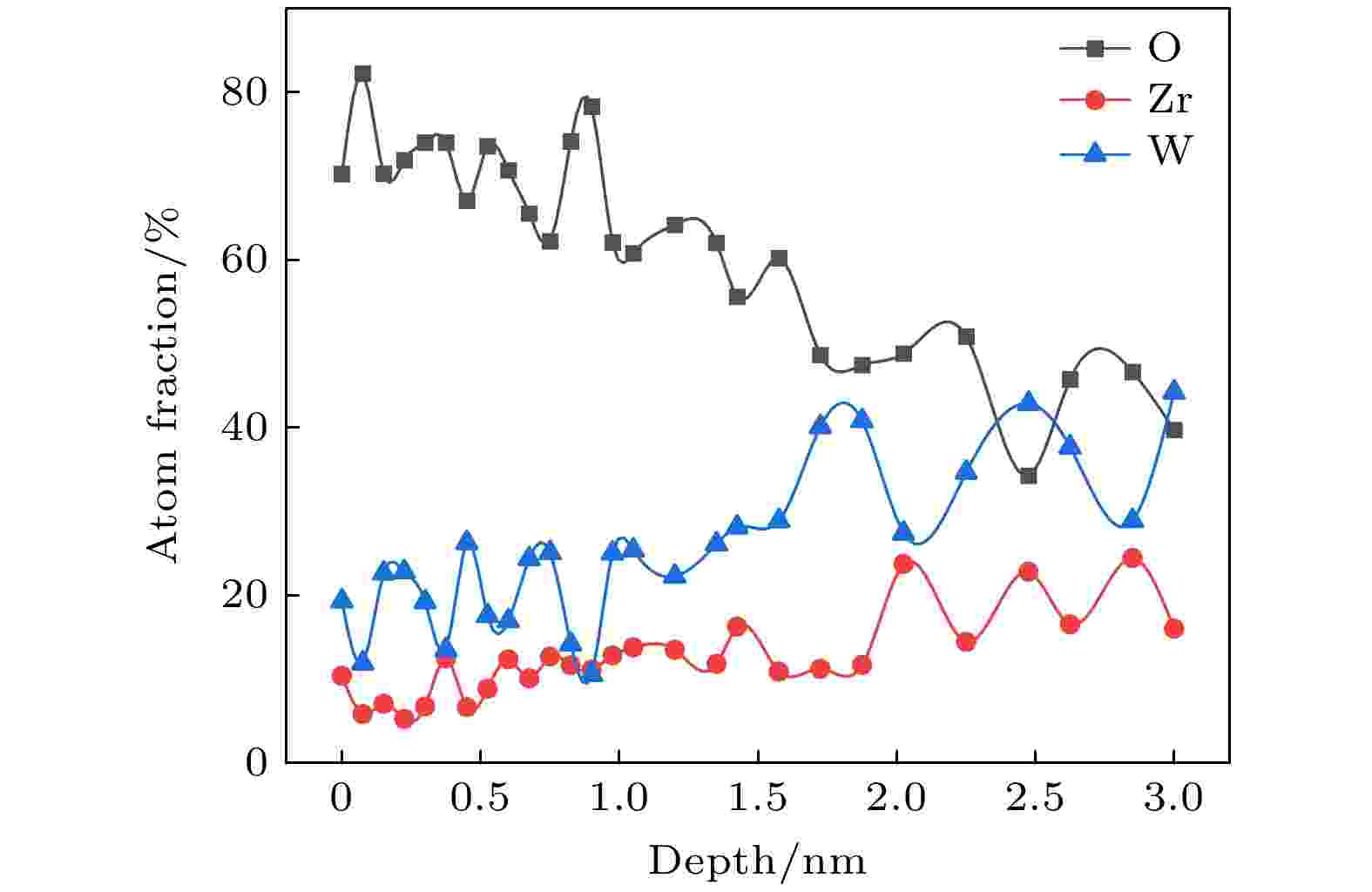
The Zr/O/W Schottky-type thermal field emission cathode is a key component in advanced electron beam instrumentation, with its unique interfacial emission mechanism remaining a focus of research in cathode technology. Traditional understanding attributes the decrease of work function at the cathode tip to a monolayer adsorption of Zr-O dipoles on the W(100) facet, with the electropositive orientation directed outward, perpendicular to the surface. This study successfully fabricats a high-performance Zr/O/W Schottky-type thermal field emission cathode that exhibits exceptional emission characteristics, including a current density of 2.5×10⁴ A/cm2 and operational stability exceeding 8000 h. Comprehensive microstructural characterization of the activated emission zone is performed utilizing energy-dispersive X-ray spectroscopy (EDS) and Auger electron spectroscopy (AES), thereby precisely determining elemental distribution profiles across both surface and subsurface regions. The results reveal that during cathode preparation, the zirconia coating diffuses in the form of Zr-O complexes within the tungsten matrix, forming nanoscale enrichment zones specifically on the W(100) facet. Under operational conditions combining elevated temperature (1700–1800 K) and high electric field (>107 V/m), the W(100) surface develops not an adsorbed Zr-O dipole monolayer, but a nanoscale Zr/O/W(100) composite oxide structure. This multilayer structure consists of three coherently integrated components: 1) an oxygen-enriched diffusion layer beneath the W(100) interface, 2) the crystalline W(100) substrate, and 3) an overlying Zr-O thin film with multiatomic-layer thickness. First-principles calculations simulating the dynamic evolution of the W(100) emission interface during thermal treatment corroborate the experimental findings. The computed work function of the cathode emission surface decreases significantly from 5.02 eV (characteristic of nano-WO3) to 2.85 eV, showing excellent agreement with experimental measurements. When the emission interface becomes unbalanced due to external perturbations, the continuous diffusion of the zirconia coating toward the tip region, combined with the diffusion of Zr-O complexes from the subsurface of the W(100) crystal plane to the interface, enables autonomous replenishment of surface-active sites. This dynamic process effectively maintains a stable low-work-function emission surface. Both theoretical and experimental evidence consistently demonstrate that the Zr/O/W(100) oxide film serves as the fundamental material basis for the exceptional emission current density, remarkable stability, and extended operational lifetime of Zr/O/W cathodes.
INTERDISCIPLINARY PHYSICS AND RELATED AREAS OF SCIENCE AND TECHNOLOGY

EDITOR'S SUGGESTION
2026, 75 (1): 010810.
doi: 10.7498/aps.75.20251386
Abstract +
EDITOR'S SUGGESTION
2026, 75 (1): 010706.
doi: 10.7498/aps.75.20251372
Abstract +
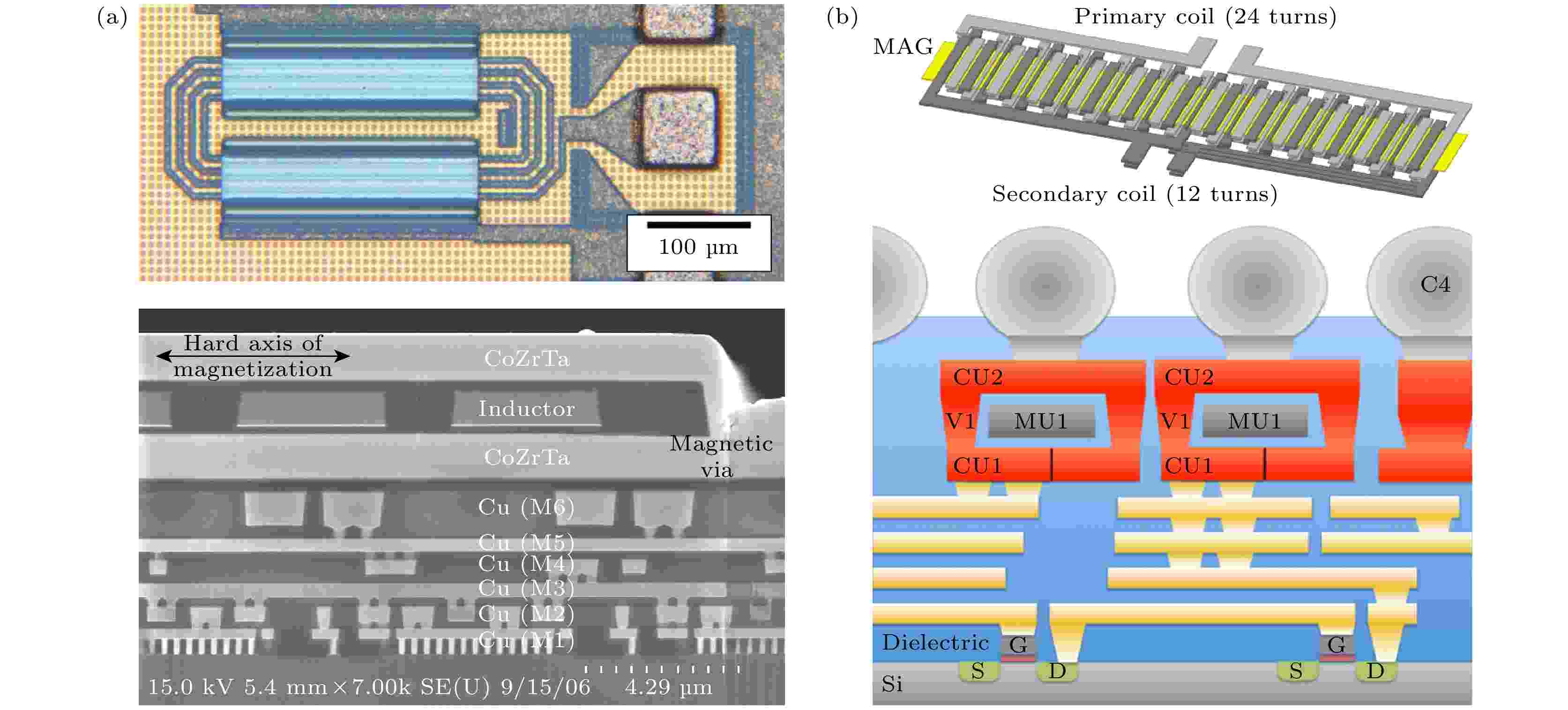
With the rise and widespread applications of three-dimensional (3D) heterogeneous integration technology, inductive voltage regulators are becoming increasingly important for mobile terminals and high-computing-power devices, while also offering significant development opportunities for high-frequency soft magnetic films. According to the requirements of on-chip power inductors, we first review the advantages and limitations of three types of magnetic core films: permalloy, Co-based amorphous metal films, and FeCo-based nanogranular composite films, with a focus on the technical requirements and challenges of several μm-thick laminated magnetic core films. Secondly, almost all on-chip inductors are hard-axis excited, which means that the magnetic field of inductors should be parallel to the hard axis of the magnetic core. We thus compare the characteristics of two methods of preparing large-area films, i.e. applying an in-situ magnetic field and oblique sputtering, both of which can effectively induce in-plane uniaxial magnetic anisotropy (IPUMA). Their influences on the static and high-frequency soft magnetic properties are also compared. The influences of film patterning on the domain structures and high-frequency magnetic losses of magnetic cores, as well as corresponding countermeasures, are also briefly analyzed. Furthermore, the temperature stability of magnetic permeability and anisotropy of magnetic core films is discussed from the perspectives of process compatibility and long-term reliability. Although the Curie temperatures and crystallization temperatures of the three types of magnetic core films are relatively high, the upper limits of their actual process temperatures are affected by the thermal effects on the alignment of magnetic atomic pairs, microstructural defects, and grain size. Finally, the current bottlenecks in testing high-frequency and large-signal magnetic losses of magnetic core films are discussed, and potential technical approaches to achieving magnetic core films that meet the future demands of on-chip power inductors for higher saturation current and lower magnetic losses are outlined.

EDITOR'S SUGGESTION
2026, 75 (1): 010301.
doi: 10.7498/aps.75.20251108
Abstract +
Lithium-oxygen batteries (LOBs) are renowned for their ultrahigh theoretical energy densities. However, their practical applications are significantly limited by sluggish oxidation kinetics and elevated charge overpotentials. Most single-atom catalysts (SACs) utilized in LOBs are predominantly based on transition metals, which feature unsaturated d-orbital coordination. In contrast, the rare-earth element samarium (Sm) possesses a rich array of 4f-orbital electrons. Recent studies have demonstrated that Sm SACs can effectively enhance the conversion of polysulfides in lithium-sulfur batteries (LSBs) and achieve remarkable cycling stability in full-cell experiments. Inspired by the work, we systematically design and optimize 17 configurations of Sm SACs for LOBs by using first-principles calculations, which are denoted as SmNxCy (x + y = 4 or 6). Through comprehensive screening for stability and catalytic activity, we identify the SmN3C3-1 catalyst as an optimal candidate for LOBs. The catalytic mechanism of the SmN3C3-1 SAC over the oxygen evolution reaction of the Li2O2 molecule is investigated. The Gibbs free energy of the two-electron dissociation process indicates that the second step of the reaction is the rate-determining step (RDS). At the equilibrium potential, the charge overpotential is 0.52 V. Furthermore, mechanistic analysis reveals that the d-f-p orbital hybridization in SmN3C3-1 effectivelyreduces the shielding effect on the Sm 4f orbitals, facilitates interfacial charge transfer, and significantly improves the catalytic performance of the Li2O2 oxidation. This study provides novel insights into the potential of rare-earth-based SACs for improving the performance of LOBs.

2026, 75 (1): 010404.
doi: 10.7498/aps.75.20251078
Abstract +
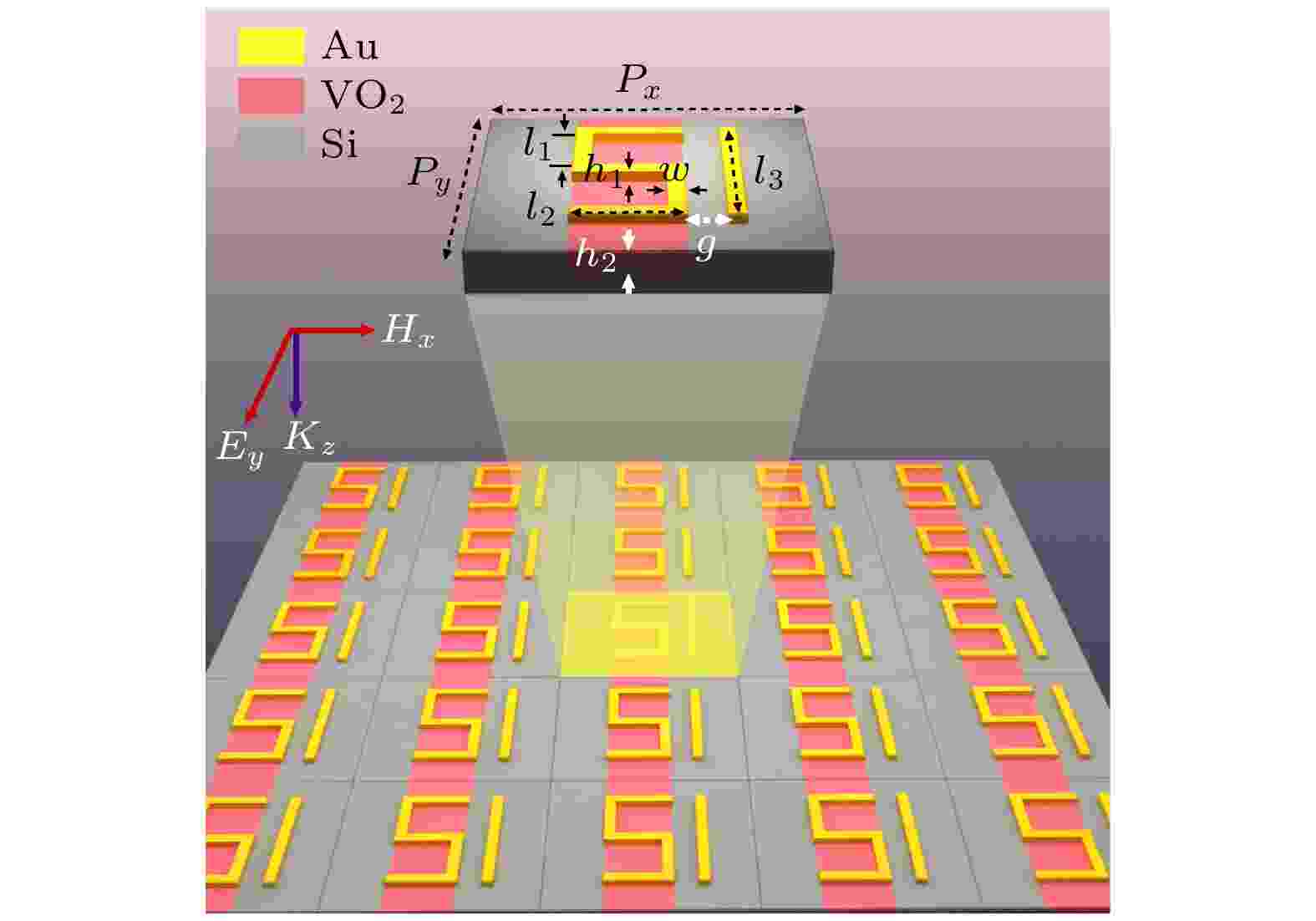
The optical vortex (OV) and spatiotemporal optical vortex (STOV) are special beams carrying different forms of orbital angular momentum (OAM). The OV has longitudinal OAM, whereas the STOV has transverse OAM and is coordinated with time to achieve control. Due to their reliance on different physical mechanisms, traditional optical platforms are difficult to independently control these two vortex beams on the same platform. This limitation, to some extent, hinders the understanding of the unified physical mechanism underlying spatial and spatiotemporal orbital angular momentum and also slows the development of multi-dimensional light field manipulation technology. This paper proposes a terahertz (THz) metasurface device based on vanadium dioxide (VO2) phase change material. The device integrates in-plane asymmetry, provided by triangular pores and required to excite STOV, with anisotropic phase units, realized by VO2 broken rings and needed to generate OV, into one metasurface platform, This integration enables dynamic switching of OV and STOV on the same metasurface platform. The uniqueness of its design and the key to achieving functional integration lie in the selection of Si and VO2 materials for the upper layer of the metasurface. When VO2 is in the insulating state, its dielectric constant in the THz band is similar to that of Si and its conductivity is very low. Different rotation angles of the units can still be considered as a periodic structure with the same symmetry on a macroscopic scale. The structure uses circularly polarized waves for reflection, generating a topological dark point at approximately 1.376 THz and a topological dark line between 1.3765 THz and 1.378 THz, which excites STOV. When VO2 transforms into a metallic state, its high conductivity makes the broken ring a dominant scatterer. By reasonably arranging the encoded units of the metasurface and combining the Pancharatnam-Berry (PB) phase, not only can OV with different topological charges be generated, but also multi-channel and multi-functional OV can be created through convolution theorem and shared aperture theorem. Subsequently, the influence of structural parameters is analyzed in detail. By changing the shape of the triangular pores and the thickness of the broken ring, the two vortex beams are adjusted, and it is found that they have strong topological stability under different conditions and can be reversibly switched through temperature control. This research provides a new idea for realizing multifunctional vortex light generation in the terahertz frequency band and opens up new avenues for the application of vortex light in terahertz communication and optical information processing.

EDITOR'S SUGGESTION
2026, 75 (1): 010601.
doi: 10.7498/aps.75.20251101
Abstract +

2026, 75 (1): 010801.
doi: 10.7498/aps.75.20250894
Abstract +
The spatial attitude and dynamic performance of the cold mass support system for superconducting magnets are critical for engineering applications. This study aims to develop a design method for the spatial attitude of tie rods through a series of theoretical derivations and simulations, enabling superconducting magnets to possess a certain degree of dynamic environmental adaptability. This paper first constructs a mathematical model of the three-dimensional cold mass support system under impact loads. Stress formulas for the tie rod under vertical 5g, axial 3g, and lateral 3g impact loads are derived. Based on this, a penalty term for stress differences is introduced to construct the objective function, and the spatial inclination angle of the tie rod is optimised. After determining the acute angle between the tie rod and the coordinate axis, the cold mass support structure exhibits four different attitudes. In order to keep the natural frequency of the magnet away from the main excitation frequency band of vehicle transportation, this study uses the finite element method to perform modal analysis and proposes a method for posture design based on the principle of maximising the first-order natural frequency. Finally, random vibration simulations are conducted for the vibration environment of highway transportation. Reference points are established at both ends of the axis of the magnet body components and the room-temperature tube axis. The displacement response power spectral density (PSD) curves and root mean square values of the reference points during vibration are analysed. The conclusions of this study are as follows. 1) When the acute angles α, β, and γ included between the tie rod and the vertical, axial, and lateral directions are 31.22°, 68.50°, and 68.50°, respectively, the mechanical performance of the three-dimensional cold mass support system reaches its optimal state. 2) When the tie rod is installed in the spatial attitude configuration, the first-order natural frequency of the cold mass system is the highest, with a value of 125.99 Hz. 3) During long-distance integrated vehicle transportation, the maximum values of the vertical and lateral displacements of the magnet assembly axis relative to the room-temperature tube axis are both less than 0.1 mm. The maximum stress locations are both at the root of the carbon fibre tie rod, far below the strength limit of carbon fibre composite materials, indicating that the superconducting magnet possesses a certain degree of dynamic environmental adaptability. These analysis results provide theoretical guidance and data support for the structural safety and stability of this type of superconducting magnet during long-distance integrated vehicle transportation.

2026, 75 (1): 010806.
doi: 10.7498/aps.75.20251122
Abstract +
Review

EDITOR'S SUGGESTION
2026, 75 (1): 010701.
doi: 10.7498/aps.75.20250833
Abstract +
EDITOR'S SUGGESTION
2026, 75 (1): 010808.
doi: 10.7498/aps.75.20251241
Abstract +
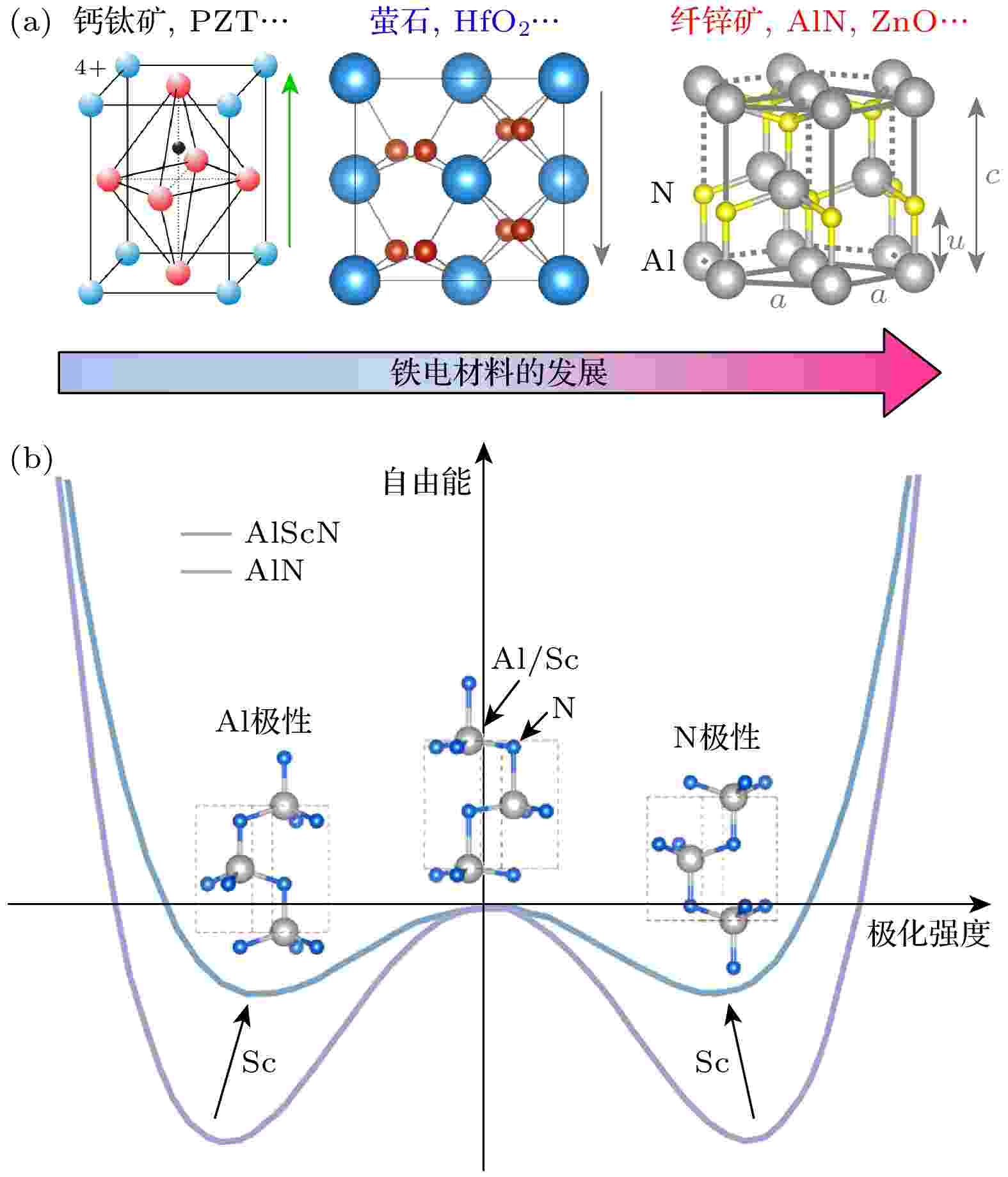
Al1–xScxN, as a new generation of wurtzite-type ferroelectric material, has become a focal point in ferroelectric materials research in recent years, due to its high remnant polarization, nearly ideal rectangular polarization-electric field hysteresis loops, inherent compatibility with back-end-of-line (BEOL) CMOS processes, and stable ferroelectric phase structure. The systematic and in-depth studies on the preparation, property modulation, and device applications of this material have been conducted. This paper provides a comprehensive review of the research progress of Al1–xScxN ferroelectric thin films. Regarding the factors influencing ferroelectric properties, it emphasizes the regulatory effects of Sc doping concentration on phase transition and coercive field, explores the influences of substrate (such as Si and Al2O3) and bottom electrode (such as Pt, Mo, and HfN0.4) on thin-film orientation, stress, and interface quality, and systematically summarizes the influences of deposition conditions, film thickness, testing frequency, and temperature on ferroelectric performance. At the level of physical mechanisms governing polarization switching, this review elaborates on the domain structure, domain wall motion dynamics, nucleation sites and growth mechanisms in the Al1–xScxN switching process, revealing its microscopic response behavior under external electric fields and the mechanisms underlying fatigue failure. In terms of application prospects, Al1–xScxN thin films show significant advantages in memory devices such as ferroelectric random-access memory (FeRAM), ferroelectric field-effect transistors (FeFETs), and ferroelectric tunnel junctions (FTJs). Their high performance and integration compatibility provide strong technical support for developing next-generation, high-density, low-power ferroelectric memory and nanoelectronic devices.
GENERAL

2026, 75 (1): 010001.
doi: 10.7498/aps.75.20251114
Abstract +

2026, 75 (1): 010002.
doi: 10.7498/aps.75.20251167
Abstract +

2026, 75 (1): 010003.
doi: 10.7498/aps.75.20251242
Abstract +
The exploration of complex-valued chaos not only provides a feasible approach for practical applications such as image encryption, but also has great potential in simulating wave phenomena and quantum inspired process. In order to bridge it with nonlinear circuit components, we introduce a novel complex-valued chaotic system by embedding a discrete memristor into a complex Gaussian map. The memristor, a component with inherent physical memory, is uniquely driven by the modulus of the complex state variable, which is a key physical quantity often related to energy or amplitude in wave systems. This coupling induces complex nonlinear dynamics, which are physically characterized through Lyapunov exponents and bifurcation analysis, revealing an enhanced and more robust chaotic regime. The physical feasibility of this system is demonstrated by its successful hardware realization on an FPGA platform. To demonstrate its potential applications, we leverage the complex chaotic flows of the system to engineer a dual-image encryption scheme, where the encryption process is explained as a physical diffusion and scrambling of information represented by a complex matrix. Our results verify that this approach not only yields a cryptosystem with high security but also provides a link between complex chaos and information security applications.

2026, 75 (1): 010602.
doi: 10.7498/aps.75.20251171
Abstract +

EDITOR'S SUGGESTION
2026, 75 (1): 010901.
doi: 10.7498/aps.75.20251168
Abstract +
ATOMIC AND MOLECULAR PHYSICS

EDITOR'S SUGGESTION
2026, 75 (1): 010302.
doi: 10.7498/aps.75.20251144
Abstract +
The solar radiation-convection boundary ($ T \thicksim 180$ eV, $ n_{\mathrm{e}} \thicksim 9 \times 10^{22}\;{\rm{cm}}^{-3}$) marks the transition from radiative to convective energy transport, serving as a natural laboratory for hot dense plasmas. Its physical properties are crucial for stellar evolution and energy transport models, yet how electron-impact ionization (EII) is influenced by hot-dense environment effects—such as electron screening and ion correlation—remains unclear. To address this, we systematically calculate EII cross sections for C, N, and O ions under realistic solar boundary conditions, focusing on the role of environmental effects. We develop a novel computational framework that integrates hot-dense environment effects into atomic structure calculations: the Flexible Atomic Code (FAC) for atomic structure is combined with the Hypernetted-chain (HNC) approximation to capture electron–electron, electron–ion and ion-ion correlations, enabling self-consistent treatment of electron screening and ion correlation. Atomic wave functions are derived by solving the Dirac equation within the ion-sphere model, using a modified central potential that combines both free-electron screening and ion–ion interactions. EII cross sections are then computed via the distorted-wave (DW) approximation in FAC. The results demonstrate that the hot-dense environment effects significantly enhance the electron-impact ionization cross sections of C, N, and O, compared with those calculated under the free-atom model. Additionally, a notable reduction in the ionization threshold energy is observed. These effects are attributed to the overlap of atomic potentials due to strong ion coupling and the shift in bound-state energy levels caused by free-electron screening. For instance, under solar boundary conditions, the ionization cross section of C+ is increased by up to 50%, with the ionization threshold decreasing from about 24 eV (isolated) to 18 eV (with screening). Similar enhancements are observed for nitrogen and oxygen ions across various charge states. By establishing updated ionization cross sections for C, N, and O ions under realistic solar interior conditions, this work provides fundamental parameters for improving radiation transport models, ionization balance calculations, and equation-of-state models in stellar interiors. The results underscore the necessity of incorporating hot-dense environment effects in the calculations of atomic processes in hot dense plasmas, which is of great significance for astrophysics and inertial confinement fusion research.

EDITOR'S SUGGESTION
2026, 75 (1): 010303.
doi: 10.7498/aps.75.20251234
Abstract +
Photoionization time delay in atoms and molecules is a fundamental phenomenon in attosecond physics, encoding essential information about electronic structure and dynamics. Compared with atoms, molecules exhibit anisotropic potentials and additional nuclear degrees of freedom, which renders the explanation of molecular photoionization time delays more complicated but also more informative. In this work, we investigate the dependence of the photoionization time delay on the internuclear distance in the 5σ→kσ ionization channel of carbon monoxide (CO) molecules. The molecular ground state is obtained using the Hartree-Fock method, and the photoionization process is treated within quantum scattering theory based on the iterative Schwinger variational principle of the Lippmann-Schwinger equation. Numerical calculations are performed with the ePolyScat program to obtain molecular-frame differential photoionization cross sections and time delays at various internuclear distances. Our results show that the extrema of the photoionization time delay occur near the peaks and dips of the differential cross section and shift toward lower energies as the internuclear distance R increases. At low energies, the time delay at the O end increases with R, while it decreases at the C end. This behavior is attributed to the asymmetric charge distribution and the resulting short-range potential difference between the two atomic sites. Around the shape-resonance energy region, both cross section and time delay display pronounced peaks associated with an l = 3 quasi-bound state. As R increases, the effective potential barrier broadens, the quasi-bound state energy moves toward lower values, and its lifetime becomes longer, leading to enhanced resonance amplitude and increased time delay. In the high-energy region, opposite-sign peaks of time delay are found along the O and C directions, corresponding to minima in the cross section. These features are well explained by a two-center interference model, where increasing R shifts the interference minima and the associated time-delay peaks toward lower energies. This study provides deeper insights into the photoionization dynamics of CO molecules, explains the role of nuclear motion, and provides valuable references for studying the photoelectron dynamics of more complex molecular systems.
ELECTROMAGNETISM, OPTICS, ACOUSTICS, HEAT TRANSFER, CLASSICAL MECHANICS, AND FLUID DYNAMICS

2026, 75 (1): 010402.
doi: 10.7498/aps.75.20251048
Abstract +
This work proposes a pattern recognition method for the superposition state orbital angular momentum (OAM) of vortex beams based on convolutional neural network (CNN) and improved vision transformer (VIT). Organically integrating the local feature extraction advantages of CNN with the global fast classification ability of VIT driven by sparse attention mechanism, using three sets of Laguerre-Gaussian (LG) beam patterns with superimposed light field intensity distribution maps of ocean turbulence distortion as input, efficient and accurate recognition of end-to-end wavefront distortion is realized. MATLAB numerical simulation is adopted to simulate the superposition state LG beam in ocean turbulent environment, power spectrum inversion method is used to simulate ocean turbulence, and recognition accuracy and confusion matrix are used as evaluation indicators for OAM pattern recognition. The experimental results show that the CNN-VIT model exhibits excellent performance in OAM pattern recognition accuracy under different ocean turbulence intensities, wavelengths, transmission distances, and mode intervals. Compared with existing CNN and VIT, the proposed model improves recognition accuracy by 23.5% and 9.65% respectively under strong ocean turbulence conditions, thus exhibiting strong generalization ability under unknown ocean turbulence strengths. This demonstrates the potential application of the CNN-VIT model in OAM pattern recognition of vortex light superposition states.

2026, 75 (1): 010403.
doi: 10.7498/aps.75.20251074
Abstract +
EDITOR'S SUGGESTION
2026, 75 (1): 010405.
doi: 10.7498/aps.75.20251211
Abstract +
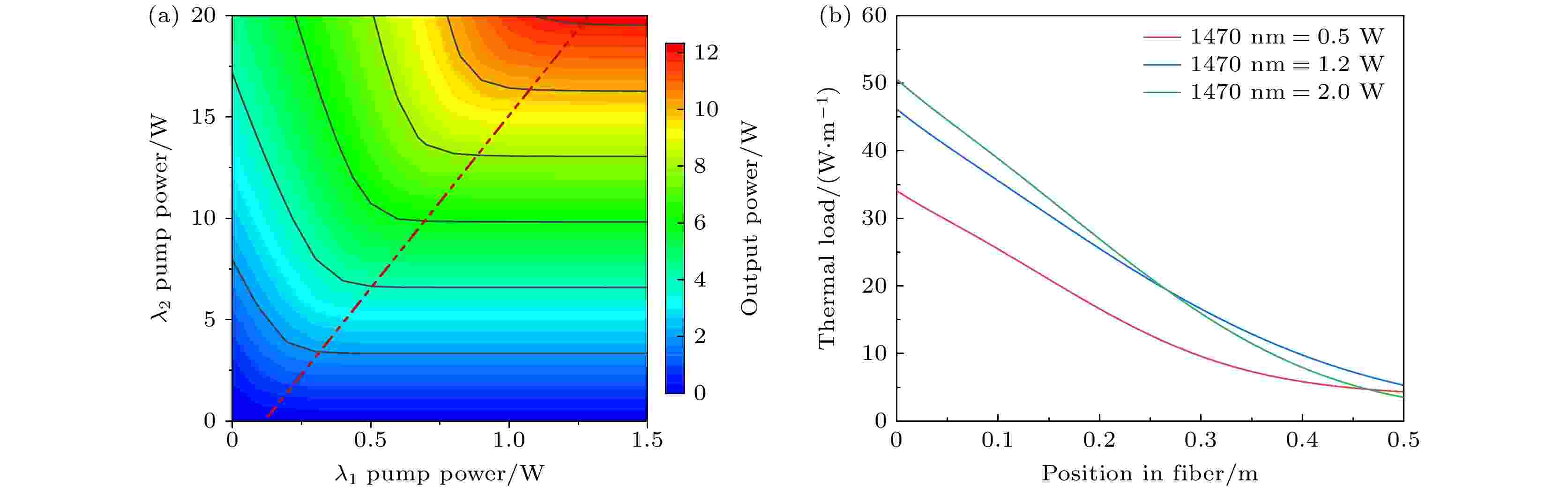
Er3+-doped ZBLAN fiber lasers have been widely investigated for generating high-power high-efficiency 2.8 μm mid-infrared lasers. High-power multimode 980 nm semiconductors are generally used as convenient pump sources in Er3+-doped ZBLAN fiber lasers. However, the longer lifetime of the lower laser level (4I13/2, 9.9 ms) than that of the upper laser level (4I11/2, 6.9 ms) results in severe self-terminating transition. Although highly Er-doped fibers with improved energy transfer upconversion rates can alleviate this problem to some extent, there are still significant limitations in heat load management. On the other hand, the 1.6–1.7 μm laser is used as another pumpscheme due to the partial spectral overlap between ground state absorption (GSA) and excited state absorption (ESA) for population inversion. This pump scheme demonstrates a slope efficiency of up to 50%. However, due to the weak GSA process, a 10 m-long active fiber is required. To address this issue, we propose a dual-wavelength (1.5 μm and 1.7 μm) pumping technique to achieve high-efficiency 2.8 μm laser output by using an Er3+-doped ZBLAN fiber with meter-level length. A simulation model is established for the dual-wavelength pumping scheme. This scheme combines the strong GSA process in the 1.5 μm band and the strong ESA process in the 1.7 μm band to accelerate the population accumulation on the lower laser level, promote the absorption of the 1.7 μm pump, and thereafter enable the conversion to 2.8 μm laser over much shorter gain fiber. By considering the intensities of ground state absorption and emission of the 4I15/2→4I13/2 transition, the pump at 1470 nm is selected to efficiently populate the Er3+ to the lower laser level. Then the second pump is optimized to a wavelength of 1680 nm to achieve rapid particle extraction from the lower laser level, thereby realizing population inversion for efficient 2.8 μm laser generation over a meter-long gain fiber. Using the optimized pump wavelengths, the simulation of a 2.8 μm fiber laser based on a 0.5 m-long 0.015 mol/mol erbium-doped fluoride fiber shows that when a 20 W 1680 nm laser is used as the main pump source, only a 1.2 W 1470 nm auxiliary pump is required to achieve a 12.2 W 2.8 μm laser output, with an optical efficiency as high as 58.2%. Furthermore, the fiber laser simulation indicates that when the powers of the two pumps satisfy the relationship of Pλ2 = 20Pλ1 – 4, the output power of the laser system can reach its maximum value. The dual-wavelength pumping technique proposed in this work enables high-efficiency 2.8 μm mid-infrared laser generation by using meter-long Er3+-doped fluoride fiber, which significantly improves the laser system integration and economic benefits.

2026, 75 (1): 011001.
doi: 10.7498/aps.75.20251095
Abstract +
This paper develops a regularized lattice Boltzmann method for efficiently simulating the flow of N-phase immiscible incompressible fluids based on the phase field model that satisfies conservation and compatibility. By designing auxiliary moments, this method can accurately recover the second-order Allen-Cahn equation and the modified momentum equation. The correctness and effectiveness of the developed N-phase regularized lattice Boltzmann method are validated through numerical simulations of three-phase liquid lens spreading and Kelvin-Helmholtz instability phenomena. Finally, numerical simulations and analyses of three-phase Rayleigh-Taylor instabilities (RTI) are conducted, focusing on the evolution of the phase interface within the Reynolds number range of $ 500 \leqslant Re \leqslant 20000 $ (particularly under high Reynolds number condition of $ Re = 20000 $). Quantitative analyses are performed on the amplitude variations of bubbles and spikes at the two interfaces, as well as the changes in dimensionless velocity. We find that as the Reynolds number increases, the phase interface curls up at multiple locations due to Kelvin-Helmholtz instability, making the fluid more prone to dispersion and fragmentation. This study also simulates the evolutionary processes of RTI under different interface perturbations. These results demonstrate that RTI first develops at the perturbed interface, with its subsequent evolution inducing instability at a secondary interface.
2026, 75 (1): 011002.
doi: 10.7498/aps.75.20251261
Abstract +
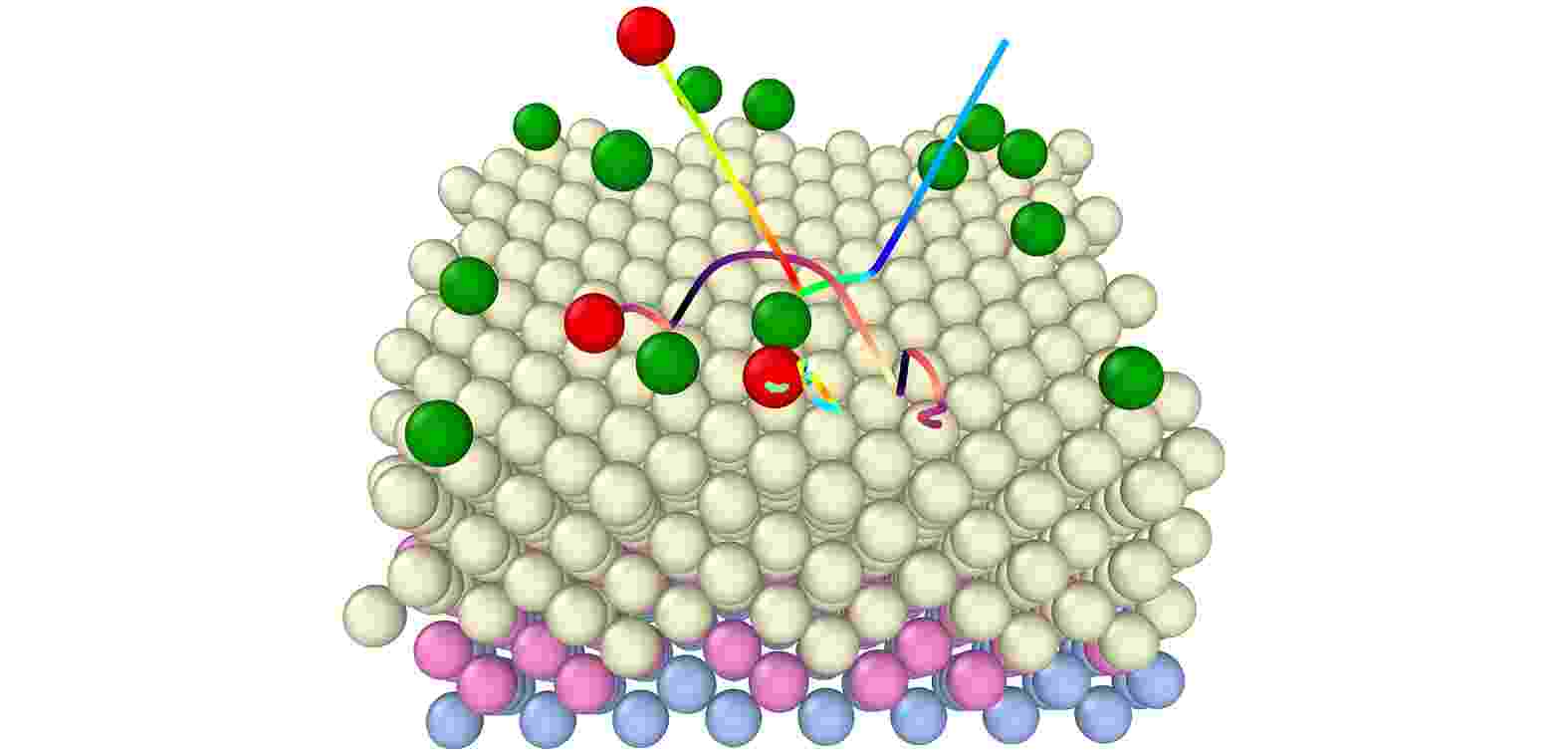
In rarefied gas flows, accommodation coeffcients (ACs) serve as core parameters for gas-surface interactions and play a crucial role in the accuracy of mesoscopic model simulations. However, there exist significant discrepancies in the ACs obtained by different molecular dynamics simulation methods. To accurately characterize the momentum and energy accommodation properties of rarefied gases with solid surfaces under non-equilibrium conditions, this study systematically investigates the gas-surface interactions between argon molecules and platinum surfaces using molecular dynamics (MD) methods. By using single scattering (SS) and continuous scattering (CS) methods, the effects of gas-gas collisions on tangential momentum accommodation coeffcient (TMAC), normal momentum accommodation coeffcient (NMAC), and energy accommodation coeffcients (EAC) are compared and analyzed, as well as the operating rules of parameters such as surface morphology, surface temperature, incident velocity, and mean free path (MFP). The results demonstrate that gas density exerts a dual effect on momentum and energy accommodation: at smaller MFP, the high gas density within the interaction region impedes the accommodation of subsequent incident molecules with the surface, resulting in lower ACs; at moderate MFP, gas-gas collisions promote the accommodation by increasing the frequency of gas-surface collisions, thereby enhancing ACs. Within the MFP range of 2.0–60.0 nm, the deviation in ACs between the CS and SS methods ranges from –14.88% to 5.21%, validating the dual role of gas density. Furthermore, at larger MFP, the TMAC and NMAC obtained via the CS method exhibit different trends with the increase of MFP across surfaces of varying morphologies. In contrast to gas density, increases in both surface temperature and incident velocity shorten the interaction time, resulting in reduced ACs. Notably, the effect of temperature varies across surfaces with different morphologies: elevated temperatures on smooth surfaces enhance the thermal fluctuations of surface atoms, thereby increasing NMAC, while elevated temperatures on rough surfaces make the rough structures smoother, thereby suppressing accommodation. Under high-speed incident conditions, gas-gas collisions enhance NMAC on smooth surfaces, inhibit both TMAC and NMAC on rough surfaces, and suppress EAC across all surfaces. In addition, the ACs obtained via both the CS and SS methods decrease with the increase of incident velocity on surfaces of different morphologies.
PHYSICS OF GASES, PLASMAS, AND ELECTRIC DISCHARGES

EDITOR'S SUGGESTION
2026, 75 (1): 010501.
doi: 10.7498/aps.75.20251022
Abstract +
A large number of energetic particles (EPs) are generated in the heating process to obtain the high temperature plasma for fusion research. These EPs can resonantly excite various magnetohydrodynamic (MHD) instabilities, including the Alfvén eigenmodes (AEs) and the energetic particle modes (EPMs). The excitation of such MHD instabilities can lead to significant EP losses, which not only degrades the plasma confinement and heating efficiency, but also results in excessive heat loads and damage to plasma-facing components. In this work, the influences of key plasma parameters on the excitation and damping effect of EP-driven MHD instabilities in Heliotron J device are investigated for better understanding of the excitation and transport mechanism of EPs driven MHD in specific device, which is meaningful for achieving stable plasma operation in future fusion devices with different heating methods. In this work, the typical EPs driven MHD instabilities are observed using various diagnostic methods, such as magnetic probes, beam emission spectroscopy (BES), electron cyclotron resonance (ECE) radiometers, and interferometers. Combined with the simulation results from STELLGAP and FAR3D programs, the modulus, radial distribution, and spectral characteristics of different instabilities are analyzed in depth, revealing the evolutions of AEs and EPMs in the Heliotron J device under typical heating conditions. This study quantitatively reveals the driving and suppressing mechanisms of EP-driven instabilities by the electron density (ne), the electron temperature (Te), and the energetic/thermal particle specific pressure (βf/βth) in Heliotron J device, under the conditions of different electron cyclotron resonance heating (ECH) and neutral beam injection (NBI). The results show that different characteristics are obtained under the different magnetic field geometry conditions. The results show that an increase in electron density can reduce the instability intensity by about 40%–60%, and an increase in the specific pressure of energetic particles can double the modal growth rate, while an increase in the specific pressure of hot particles has an inhibitory effect of 20%–50% on the growth rate of the low order modes. These findings are useful for understanding the different effects of ECH and NBI on the EPs driven MHD instabilities, and they are also helpful for achieving stable operation by adjusting the heating system parameters in the stellarator-like devices in the future.
Multiple diagnostic techniques measured neutral gas temperatures in N2 plasma and Ar-N2 mixed plasma
2026, 75 (1): 010502.
doi: 10.7498/aps.75.20251240
Abstract +
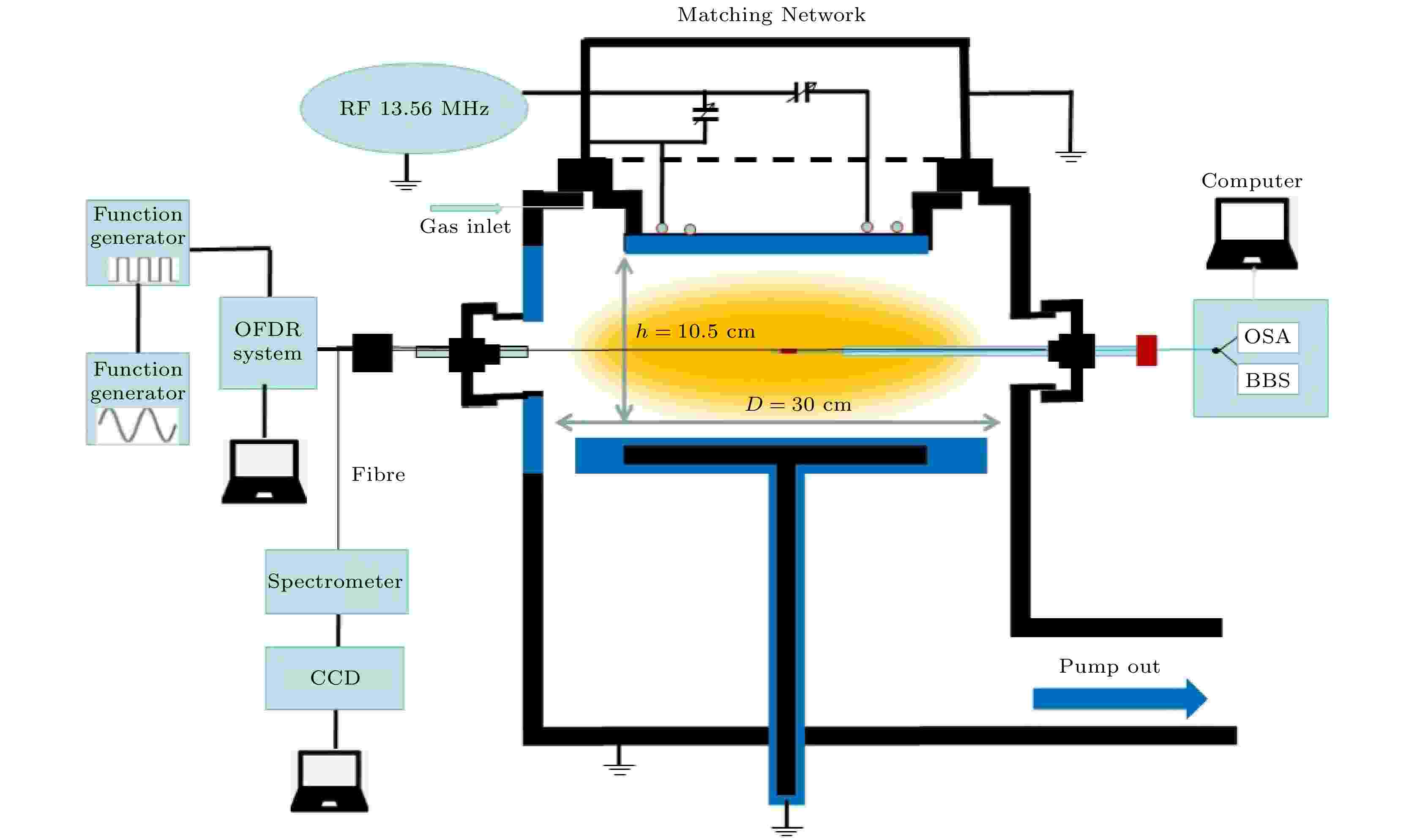
Low-temperature inductively coupled radio-frequency plasma is a key plasma source in semiconductor fabrication, where the neutral gas temperature (Tg) is one of the critical parameters influencing chemical reactions and plasma characteristics. Precise control of Tg significantly influences processes such as thin-film deposition and reactive ion etching, with its synergistic interaction with plasma parameters (ne, Te) often determining process outcomes. Consequently, a thorough understanding of the evolution of Tg and its correlation with discharge parameters has become a critical issue for optimizing semiconductor manufacturing processes. To achieve more accurate measurements of neutral gas temperature, this work employs three temperature measurement techniques: spectroscopy, Bragg grating, and fiber optic sensing. These methods are used to systematically investigate the variation patterns of neutral gas temperature (Tg) in nitrogen plasma and nitrogen-argon mixed plasma under different radio-frequency power, gas pressure, and gas composition conditions. To elucidate the gas heating mechanism, this work combines Langmuir probe measurements of electron density, electron temperature, electron energy probability distribution with a global model simulation. The results show that as the RF power increases, the energy coupled to the plasma increases, the ionization reaction is enhanced, and the collision process and energy transfer between electrons and neutral particles increase, resulting in a monotonically increasing trend of Tg. When gas pressure initially increases, both electron density and background gas density rise together, enhancing heating efficiency and driving rapid Tg growth. However, beyond 3 Pa, electron mean free path shortens and electron density declines. In contrast, background gas density continues to increase, leading to slower Tg growth. In nitrogen/argon mixed system discharges, increasing the argon proportion significantly enhances the rate of Tg increase. This occurs because a higher argon ratio elevates the proportion of high-energy electrons and electron density, thereby strengthening ionization and neutral gas heating. At the same time, argon metastable atoms enhance the density of excited nitrogen particles through the Penning process, which promotes nitrogen molecular excitation to higher energy levels and further heats the gas. Additionally, we observe that the radial temperature distribution in pure nitrogen plasma shifts from parabolic to saddle-type with axial height increasing, due to intensified electron collision excitation near the coil under electromagnetic field effects. In this study, it is also found that the glass transition temperature at the radial edge remains virtually unchanged as atmospheric pressure increases. This is because, as pressure continues to rise, electrons beneath the coil struggle to migrate to the radial edge to collide with neutral particles, thereby limiting the heating of edge neutral particles.
CONDENSED MATTER: STRUCTURAL, MECHANICAL, AND THERMAL PROPERTIES
2026, 75 (1): 010703.
doi: 10.7498/aps.75.20251180
Abstract +
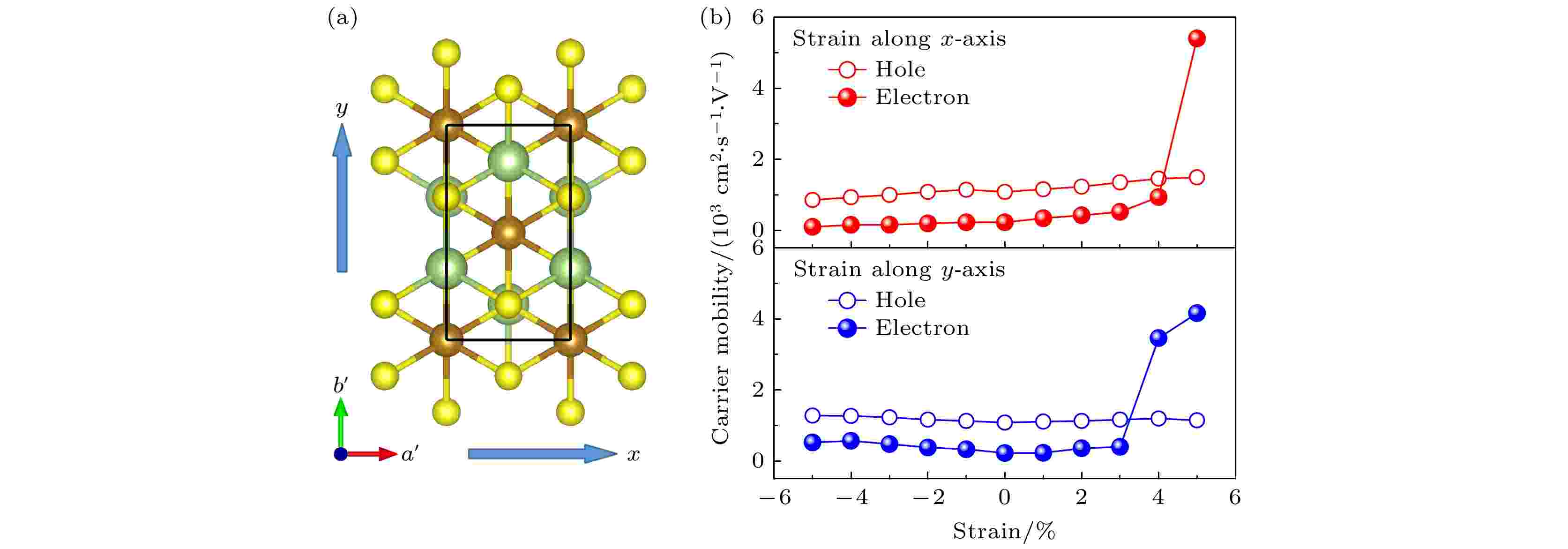
This study aims to explore two-dimensional semiconductor materials with superior carrier transport properties to meet the growing demands of high-speed electronics and optoelectronic devices, focusing on evaluating the feasibility of monolayer FeGa2S4 as a candidate material through systematic theoretical investigations. First-principles calculations are used to analyze the exfoliation energy of FeGa2S4 bulk crystal, as well as the structural stability, mechanical properties, and strain-dependent optoelectronic behavior of its monolayer counterpart. Strain engineering strategies, including uniaxial and biaxial strain, are used to assess carrier mobility modulation and spectral response. Our calculation results indicate that monolayer FeGa2S4 is an indirect bandgap semiconductor (Eg = 1.65 eV) with low stiffness (Young’s modulus up to 151.6 GPa) and high flexibility (Poisson’s ratio less than 0.25), demonstrating exceptional thermodynamic stability. Under +5% uniaxial tensile strain, its electron mobilities along x and y directions dramatically increases to 5402.4 cm2·V–1·s–1 and 4164.0 cm2·V–1·s–1, fivefold higher than its hole mobility. Biaxial strain outperforms uniaxial strain in bandgap modulation and induces a systematic redshift in optical spectra, significantly enhancing visible-light harvesting efficiency. This work reveals that monolayer FeGa2S4 is a promising high-mobility photoactive material for next-generation solar cells and optoelectronics. The strain-mediated control of electronic and optical properties provides a theoretical framework for optimizing 2D semiconductors and critical guidance for experimental synthesis and device engineering. These findings highlight the potential of materials in advancing energy conversion technology and photonic applications.

2026, 75 (1): 010802.
doi: 10.7498/aps.75.20251029
Abstract +
Porous anodic aluminum oxide (AAO) films, due to their excellent dielectric, mechanical, and optical properties, have been widely used in electronic devices, catalytic supports, and optical materials. Anodization is the primary method for fabricating high-quality porous AAO films. The conductive behavior and mechanism of commonly used carbon rod counter electrodes are significant factors influencing the microstructure and properties of the films. In this study, a phosphoric acid solution with a mass fraction of 6% is used as the electrolyte, circular aluminum foil serves as the anode, and carbon rods are used as the counter electrodes spaced 15 cm apart. The oxidation time is fixed at 40 s. The conductive behaviors of the carbon rod under oxidation voltages ranging from 100 to 140 V are experimentally investigated. The results show that the pore depth and diameter of the AAO film symmetrically decrease from the film center toward the edges. When the oxidation voltage is below 110 V, the gradients of pore depth and diameter from the center outward are relatively small, resulting in a macroscopically uniform structural color. At an oxidation voltage of 110 V, the gradients of pore depth and diameter increase significantly, resulting in iridescent concentric ring structural colors. As the voltage increases further, the gradients become more pronounced, the number of structural color rings increases, and the visible color gamut significantly broadens. Electromagnetic and electrochemical theories are utilized to calculate the conductive behaviors of the carbon rod under different oxidation voltages and to analyze its conduction mechanism. The carbon rod is found to exhibit “quasi-point electrode” conductive characteristics, with the selection of point electrode positions on the carbon rod following the principle of minimizing the resistance between the two electrodes. This finding not only enriches the electrochemical theory of anodization but also provides theoretical and experimental support for fabricating multifunctional AAO films.

2026, 75 (1): 010807.
doi: 10.7498/aps.75.20251220
Abstract +
Relaxor ferroelectric sodium bismuth titanate (Na0.5Bi0.5TiO3, NBT) exhibits outstanding ferroelectric characteristics and is widely recognized as a highly promising lead-free ferroelectric material. In order to further promote the application of this environmentally friendly ferroelectric material, it is crucial to gain a comprehensive understanding of its structural evolution and phase transition mechanism under high pressure. This study investigates the structural evolution of NBT under hydrostatic pressure up to 6.8 GPa by integrating in situ high-pressure neutron diffraction experiments with first-principles calculations. Based on high-pressure neutron diffraction experiments conducted at the China Mianyang Research Reactor (CMRR), Rietveld refinement analysis identifies a phase transition from the ambient-pressure R3c phase to the high-pressure Pnma phase in NBT, with a coexistence pressure range of 1.1–4.6 GPa. The bulk modulus of the high-pressure phase Pnma is experimentally determined to be 108.6 GPa for the first time. First-principles calculations further support the thermodynamic tendency for the pressure-induced phase transition from R3c to Pnma and produce a bulk modulus that is in close agreement with the experimental value. By correlating with the experimentally obtained trends of the internal [TiO6] oxygen octahedral structural changes under high pressure in both phases, this study demonstrates that the difference in their macroscopic compressibility originates from the significantly higher pressure sensitivity of the oxygen octahedral distortion degree in the R3c phase than that of the Pnma phase. This relatively softer internal microstructure results in a lower bulk modulus than that of the Pnma phase. By providing a detailed analysis of the pressure-induced phase transition and microstructural evolution, this study clarifies the relationship between the microscopic structural features of the high-pressure and ambient-pressure phases of NBT and their influence on macroscopic mechanical properties, thereby establishing a fundamental connection between microscopic structural responses and bulk physical behavior under high-pressure conditions. These findings provide crucial experimental data and theoretical support for further improving the high-pressure performance and applications of lead-free ferroelectric materials.
