














-
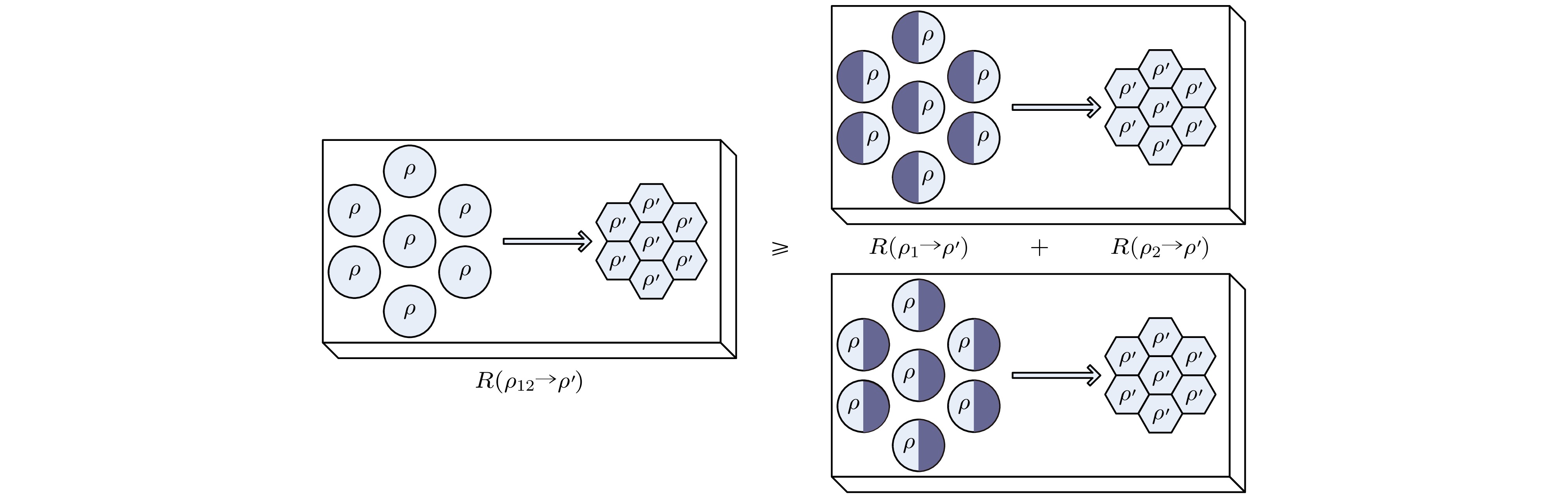
In quantum resource theories, manipulating and transforming resource states are often challenging due to the presence of noise. The resource manipulation process from a high resource state $ {\boldsymbol \rho} $ to a low resource state $ {\boldsymbol \rho} ' $ involves asymptotic multiple state replicas, which can be considered as overcoming this problem. Here, the asymptomatic transformation rate $ R\left( {{\boldsymbol \rho} \to {\boldsymbol \rho} '} \right) $ can characterize the corresponding quantum manipulation power, and can be calculated as the ratio of the copy number of initial states to the copy number of target states. Generally, the precise computations of asymptotic transformation rates are challenging, so it is important to establish rigorous and computable boundaries for them. Recently, Ganardi et al. have shown that the transformation rate to any pure state is superadditive for the distillable entanglement. However, it remains a question whether the transformation rate to any noise state is also superadditive in the general resource theory. Firstly, we study the general superadditive inequality satisfied by the transformation rate $ R\left( {{\boldsymbol \rho} \to {\boldsymbol \rho} '} \right) $ of any noise state $ {\boldsymbol \rho} ' $. In any multiple quantum resource theory, we also show that the bipartite asymptomatic transformation rate obeys a distributed relationship: when $ \alpha \geqslant 1 $, $ {R^\alpha }\left( {{\boldsymbol \rho} \to {\boldsymbol \rho} '} \right) $ satisfies monogamy relationship. Using similar methods, we demonstrate that both the marginal asymptotic transformation rate and marginal catalytic transformation rate satisfies these relationships. As a byproduct, we show an equivalence among the asymptomatic transformation rate, marginal asymptotic transformations, and marginal catalytic transformations under some restrictions. Here marginal asymptotic transformations and marginal catalytic transformations are special asymptotic transformations, where the initial state can be reduced into target state at a nonzero rate. These inequality relationships impose a new constraint on the quantum resource distribution and trade off among subsystems. Recently, reversible quantum resource manipulations have been studied, and it is conjectured that transformations can be reversibly executed in an asymptotic regime. In the future, we will explore a conclusive proof of this conjecture and then study the distributions of these reversible manipulations.
[1] Baumgratz T, Cramer M, Plenio M B 2014 Phys. Rev. Lett. 113 140401
 Google Scholar
[2] Chitambar E, Gour G 2019 Rev. Mod. Phys. 91 025001
Google Scholar
[3] 刘锋 2025 中国科学: 物理学 力学 天文学 55 240317
Google Scholar
Liu F 2025 Sci. Sin. -Phys. Mech. Astron. 55 240317
Google Scholar
[4] 王光杰, 宋学科, 叶柳, 王栋 2025 74 070301
Google Scholar
Wang G J, Song X K, Liu Y, Wang D 2025 Acta. Phys. Sin. 74 070301
Google Scholar
[5] Horodecki R, Horodecki P, Horodecki M, Horodecki K 2009 Rev. Mod. Phys. 81 865
Google Scholar
[6] Liu F, Gao F, Qin S J, Xie S C, Wen Q Y 2016 Sci. Rep. 6 20302
Google Scholar
[7] Zhang Z, Feng L, Luo S 2024 Phys. Rev. A 110 012462
Google Scholar
[8] Streltsov A, Adesso G, Plenio M B 2017 Rev. Mod. Phys. 89 041003
Google Scholar
[9] Hu M L, Hu X, Wang J, Peng Y, Zhang Y R, Fan H 2018 Phys. Rep. 762 1
Google Scholar
[10] Li P Y, Liu F, Xu Y Q 2018 Quantum Inf. Process. 17 18
Google Scholar
[11] Garcia R J, Bu K, Jaffe A 2023 Proc. Natl. Acad. Sci. U. S. A. 120 e2217031120
Google Scholar
[12] Shiraishi N, Takagi R 2024 Phys. Rev. Lett. 132 180202
Google Scholar
[13] Bennett C H, Popescu S, Rohrlich D, Smolin J A, Thapliyal A V 2000 Phys. Rev. A 63 012307
Google Scholar
[14] Nielsen M A 1999 Phys. Rev. Lett. 83 436
Google Scholar
[15] Ferrari G, Lami L, Theurer T, Plenio M B 2023 Commun. Math. Phys. 398 291
Google Scholar
[16] Ganardi R, Kondra T V, Streltsov A 2024 Phys. Rev. Lett. 133 250201
Google Scholar
[17] Zuo H, Liu F 2022 Int. J. Theor. Phys. 61 204
Google Scholar
[18] Marvian I 2020 Nat. Commun. 11 25
Google Scholar
[19] Horodecki M 2001 Quant. Inf. Comput. 1 3
Google Scholar
[20] Wilming H, Gallego R, Eisert J 2017 Entropy 19 241
Google Scholar
[21] Marvian I, Spekkens R W 2019 Phys. Rev. Lett. 123 020404
Google Scholar
[22] Pawłowski M 2010 Phys. Rev. A 82 032313
Google Scholar
[23] Coffman V, Kundu J, Wootters W K 2000 Phys. Rev. A 61 052306
Google Scholar
[24] Wang G J, Li Y W, Li L J, Song X K, Wang D 2023 Eur. Phys. J. C 83 801
Google Scholar
[25] Zhu X N, Bao G, Jin Z X, Fei S M 2023 Phys. Rev. A 107 052404
Google Scholar
[26] Liu F 2016 Commun. Theor. Phys. 66 407
Google Scholar
[27] Liu F, Gao F, Wen Q Y 2015 Sci. Rep. 5 16745
Google Scholar
[28] Bai Y K, Xu Y F, Wang Z D 2014 Phys. Rev. Lett. 113 100503
Google Scholar
[29] Zhu X N, Fei S M 2014 Phys. Rev. A 90 024304
Google Scholar
[30] Sharma H, Mokeev A, Helsen J, Borregaard J 2025 arXiv: 2505.05964 [quant-ph]
[31] Li M, Jia Y, Guo F, Dong H, Qin S, Gao F 2025 Phys. Rev. A 111 052446
Google Scholar
[32] Song Y, Wu Y, Wu S, Li D, Wen Q, Qin S, Gao F 2024 Sci. China Phys. Mech. Astron. 67 250311
Google Scholar
[33] Li L, Li J, Song Y, Qin S, Wen Q, Gao F 2025 Sci. China Phys. Mech. Astron. 68 210313
Google Scholar
[34] Ganardi R, Kondra T V, Ng N H Y, Streltsov A 2025 Phys. Rev. Lett. 135 010202
Google Scholar
[35] Yang Y G, Liu B X, Xu G B, Zhou Y H, Shi W M 2023 IEEE Trans. Inf. Forensics Secur. 18 4034
Google Scholar
-
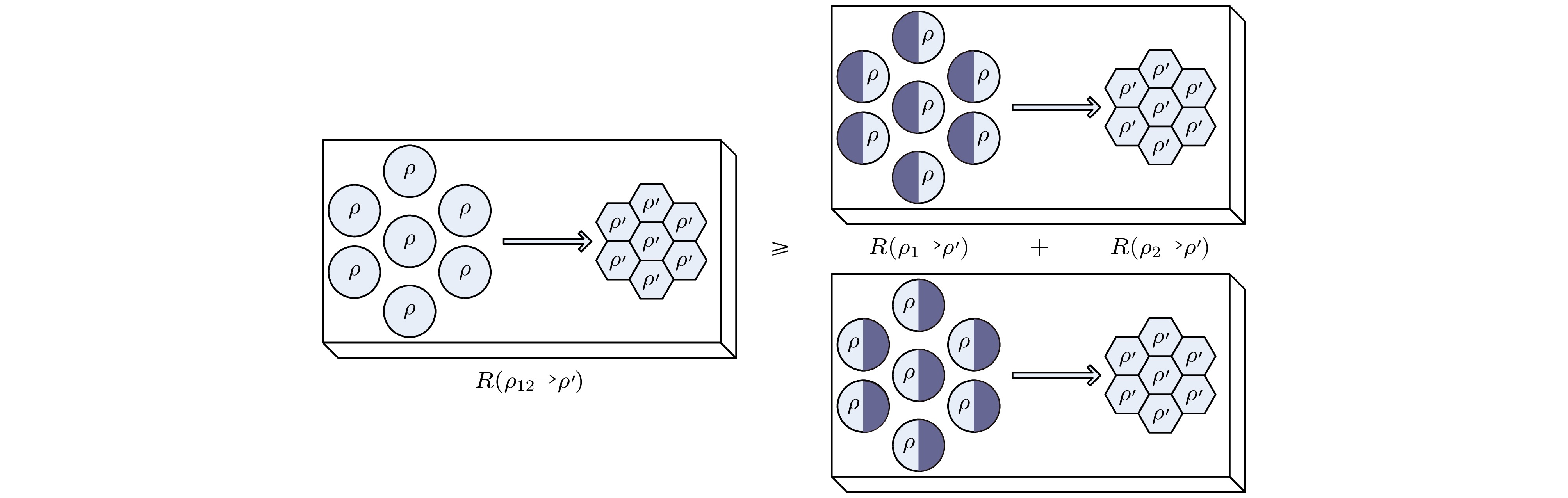
图 1 多体系统中, 两部划分下渐近转化率的单配性关系. 右上图中左灰右白的量子态表示第一部子系统中的态, 右下图中左白右灰的量子态表示第二部子系统中的态
Figure 1. In any multiple quantum resource theory, the bipartite asymptomatic transformation rates obey monogamy relations. These left gray and right white states in the top-right image are quantum states in the first subsystem, and these left white and right gray states in the below-right image are quantum states in the second subsystem.
-
[1] Baumgratz T, Cramer M, Plenio M B 2014 Phys. Rev. Lett. 113 140401
Google Scholar
[2] Chitambar E, Gour G 2019 Rev. Mod. Phys. 91 025001
Google Scholar
[3] 刘锋 2025 中国科学: 物理学 力学 天文学 55 240317
Google Scholar
Liu F 2025 Sci. Sin. -Phys. Mech. Astron. 55 240317
Google Scholar
[4] 王光杰, 宋学科, 叶柳, 王栋 2025 74 070301
Google Scholar
Wang G J, Song X K, Liu Y, Wang D 2025 Acta. Phys. Sin. 74 070301
Google Scholar
[5] Horodecki R, Horodecki P, Horodecki M, Horodecki K 2009 Rev. Mod. Phys. 81 865
Google Scholar
[6] Liu F, Gao F, Qin S J, Xie S C, Wen Q Y 2016 Sci. Rep. 6 20302
Google Scholar
[7] Zhang Z, Feng L, Luo S 2024 Phys. Rev. A 110 012462
Google Scholar
[8] Streltsov A, Adesso G, Plenio M B 2017 Rev. Mod. Phys. 89 041003
Google Scholar
[9] Hu M L, Hu X, Wang J, Peng Y, Zhang Y R, Fan H 2018 Phys. Rep. 762 1
Google Scholar
[10] Li P Y, Liu F, Xu Y Q 2018 Quantum Inf. Process. 17 18
Google Scholar
[11] Garcia R J, Bu K, Jaffe A 2023 Proc. Natl. Acad. Sci. U. S. A. 120 e2217031120
Google Scholar
[12] Shiraishi N, Takagi R 2024 Phys. Rev. Lett. 132 180202
Google Scholar
[13] Bennett C H, Popescu S, Rohrlich D, Smolin J A, Thapliyal A V 2000 Phys. Rev. A 63 012307
Google Scholar
[14] Nielsen M A 1999 Phys. Rev. Lett. 83 436
Google Scholar
[15] Ferrari G, Lami L, Theurer T, Plenio M B 2023 Commun. Math. Phys. 398 291
Google Scholar
[16] Ganardi R, Kondra T V, Streltsov A 2024 Phys. Rev. Lett. 133 250201
Google Scholar
[17] Zuo H, Liu F 2022 Int. J. Theor. Phys. 61 204
Google Scholar
[18] Marvian I 2020 Nat. Commun. 11 25
Google Scholar
[19] Horodecki M 2001 Quant. Inf. Comput. 1 3
Google Scholar
[20] Wilming H, Gallego R, Eisert J 2017 Entropy 19 241
Google Scholar
[21] Marvian I, Spekkens R W 2019 Phys. Rev. Lett. 123 020404
Google Scholar
[22] Pawłowski M 2010 Phys. Rev. A 82 032313
Google Scholar
[23] Coffman V, Kundu J, Wootters W K 2000 Phys. Rev. A 61 052306
Google Scholar
[24] Wang G J, Li Y W, Li L J, Song X K, Wang D 2023 Eur. Phys. J. C 83 801
Google Scholar
[25] Zhu X N, Bao G, Jin Z X, Fei S M 2023 Phys. Rev. A 107 052404
Google Scholar
[26] Liu F 2016 Commun. Theor. Phys. 66 407
Google Scholar
[27] Liu F, Gao F, Wen Q Y 2015 Sci. Rep. 5 16745
Google Scholar
[28] Bai Y K, Xu Y F, Wang Z D 2014 Phys. Rev. Lett. 113 100503
Google Scholar
[29] Zhu X N, Fei S M 2014 Phys. Rev. A 90 024304
Google Scholar
[30] Sharma H, Mokeev A, Helsen J, Borregaard J 2025 arXiv: 2505.05964 [quant-ph]
[31] Li M, Jia Y, Guo F, Dong H, Qin S, Gao F 2025 Phys. Rev. A 111 052446
Google Scholar
[32] Song Y, Wu Y, Wu S, Li D, Wen Q, Qin S, Gao F 2024 Sci. China Phys. Mech. Astron. 67 250311
Google Scholar
[33] Li L, Li J, Song Y, Qin S, Wen Q, Gao F 2025 Sci. China Phys. Mech. Astron. 68 210313
Google Scholar
[34] Ganardi R, Kondra T V, Ng N H Y, Streltsov A 2025 Phys. Rev. Lett. 135 010202
Google Scholar
[35] Yang Y G, Liu B X, Xu G B, Zhou Y H, Shi W M 2023 IEEE Trans. Inf. Forensics Secur. 18 4034
Google Scholar

 DownLoad:
Catalog
Metrics
- Abstract views: 1347
- PDF Downloads: 53
- Cited By: 0
