














-
In the past decade, most of researchers have been devoted to broadening the bandwidth of absorber. There are few researches on how to achieve wide-angle absorbing materials by detailed theoretical analysis and design guidance. It is still difficult to design wide-angle absorbers. In this paper, based on the equivalent medium theory, the reflectivity of the metamaterial absorber with a single-layered medium backed with metal reflector is analyzed in detail. Starting from the basic electromagnetic theory, the reflection coefficient of the absorber under transverse electric(TE) plane wave and transverse magnetic (TM) plan wave irradiation are derived. And the equivalent electromagnetic parameters of realizing the wide-angle absorbing effect are analyzed, which provide a theoretical basis for designing the wide-angle metamaterial absorber. The theoretical analysis results show that the equivalent electromagnetic parameters required for the medium to achieve low-profile and wide-angle absorbing effect are mainly related to the equivalent permeability and have little relationship with the equivalent permittivity. Moreover, the equivalent electromagnetic parameter value for achieving ultra-wide-angle absorber under TE wave and that under TM wave irradiation are different from each other. In other words, the anisotropic metamaterial with appropriate equivalent permeability has the potential to be used to design the ultra-wide-angle absorbers which are not sensitive to TE waves nor TM waves. In addition, in order to find the theoretically achievable widest absorbing angle value under TE wave and TM wave irradiation, the reflection coefficients at all angles must be less than or equal to –10 dB to obtain the relationship among the equivalent electromagnetic parameters, thickness and angle. The results show that the theoretically achievable widest absorbing angle value is 86.56° under TE wave and TM wave irradiation. The designer can choose the corresponding thickness and permeability from the data obtained from the analysis according to the design requirements. The narrow-band absorbers have limited applications. Therefore, in this paper we also theoretically analyze the values of the equivalent electromagnetic parameters for ahcieving wide-band and wide-angle absorbing materials, and make theoretical verification. The results show that the wide-band and wide-angle absorber can be achieved theoretically, while the equivalent electromagnetic parameters of the medium vary with frequency as some special curves indicate. Although this method is based on the equivalent medium theory and has no direct relationship with the actual structure, it does provide theoretical guidance for designing the wide-angle absorbers.
[1] Fante R L, McCormack M T 1988 IEEE Trans. Antenna. Propag. 36 1443
 Google Scholar
[2] Landy N I, Sajuyigbe S, Mock J J, Smith D R, Padilla W J 2008 Phys. Rev. Lett. 100 207402
Google Scholar
[3] Wang B X, Zhai X, Wang G Z, Huang W Q, Wang L L 2015 IEEE Photonics J. 7 4600108
[4] Ding F, Cui X, Ge C, Jin Y, He S L 2012 Appl. Phys. Lett. 100 103506
Google Scholar
[5] Lin X Q, Mei P, Zhang P C, Chen Z Z D, Fan Y 2016 IEEE Trans. Antenna. Propag. 64 4910
Google Scholar
[6] Hao J P, Lheurette E, Burgnies L, Okada E, Lippens D 2014 Appl. Phys. Lett. 105 081102
Google Scholar
[7] Deng T W, Li Z W, Chen Z N 2017 IEEE Trans. Antenna. Propag. 65 5886
Google Scholar
[8] Shang Y P, Shen Z X, Xiao S Q 2013 IEEE Trans. Antenna. Propag. 61 6022
Google Scholar
[9] Rozanov K N 2000 IEEE Trans. Antenna. Propag. 48 1230
Google Scholar
[10] Chen H T 2012 Opt. Express 20 7165
Google Scholar
[11] 顾超, 屈绍波, 裴志斌, 徐卓, 林宝勤, 周航, 柏鹏, 顾巍, 彭卫东, 马华 2011 60 087802
Google Scholar
Gu C, Qu S B, Pei Z B, Xu Z, Lin B Q, Zhou H, Bai P, Gu W, Peng W D, Ma H 2011 Acta Phys. Sin. 60 087802
Google Scholar
[12] 程用志, 聂彦, 龚荣洲, 王鲜 2013 62 044103
Google Scholar
Chen Y Z, Nie Y, Gong R Z, Wang X 2013 Acta Phys. Sin. 62 044103
Google Scholar
[13] 熊益军, 王岩, 王强, 王春齐, 黄小忠, 张芬, 周丁 2018 67 084202
Google Scholar
Xiong Y J, Wang Y, Wang Q, Wang C Q, Huang X Z, Zhang F, Zhou D 2018 Acta Phys. Sin. 67 084202
Google Scholar
[14] 李宇涵, 邓联文, 罗衡, 贺龙辉, 贺君, 徐运超, 黄生祥 2019 68 095201
Google Scholar
Li Y H, Deng L W, Luo H, He L H, He J, Xu Y C, Huang S X 2019 Acta Phys. Sin. 68 095201
Google Scholar
[15] Tao H, Bingham C M, Strikwerda A C, Pilon D, Shrekenhamer D, Landy N I, Fan K, Zhang X, Padilla, Averitt 2008 Phys. Rev. B 78 241103
Google Scholar
[16] Wang B N, Koschny T, Soukouli Costa M 2009 Phys. Rev. B 80 033108
Google Scholar
[17] Lee D, Hwang J G, Lim D, Hara T, Lim S 2016 Sci. Rep. 6 27155
Google Scholar
[18] Nguyen T T, Lim S 2017 Sci. Rep. 7 3204
Google Scholar
[19] Lim D, Lee D, Lim S 2016 Sci. Rep. 6 39686
Google Scholar
[20] Wang J Y, Yang R C, Tian J P, Chen X W, Zhang W M 2018 IEEE Antenna. Wireless Propag. Lett. 17 1242
Google Scholar
[21] Jin Y, Xiao S S, Mortensen N A, He S L 2011 Opt. Express 19 11114
Google Scholar
[22] Feng S M, Halterman K 2012 Phys. Rev. B 86 165103
Google Scholar
[23] Zhong S M, He S L 2013 Sci. Rep. 3 2083
Google Scholar
[24] Chen W C, Bingham C M, Mak K M, Caira N W, Padilla W J 2012 Phys. Rev. B 85 201104
Google Scholar
[25] Li C L, Guo J, Zhang P, Yu Q Q, Ma W T, Miao X G, Zhao Z Y, Luan L 2014 Chin. Phys. Lett. 31 077801
Google Scholar
-
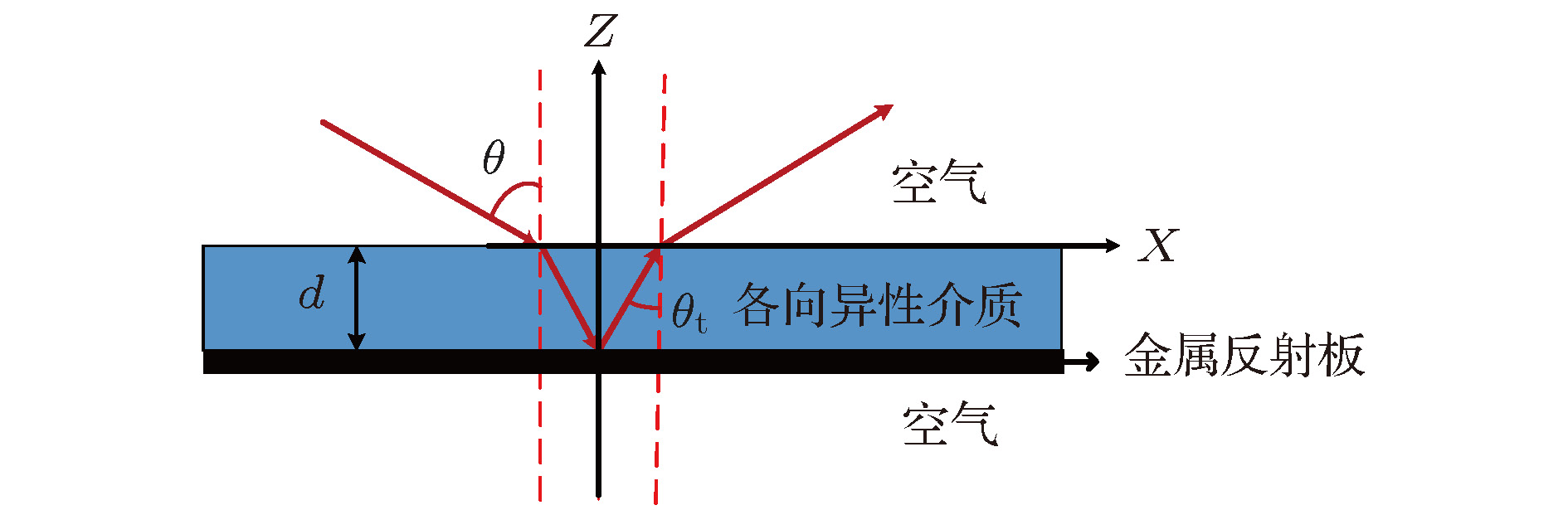
图 1 理论模型
Figure 1. Theoretical model.

图 2 超材料的反射系数随入射角度和材料电磁参数取值的变化 (a) TE波; (b) TM波
Figure 2. The reflection coefficient of metamaterial varies with the angle of incidence and the value of the electromagnetic parameters of the material: (a) TE wave; (b) TM wave.

图 3 超材料的反射系数随入射角度和材料电磁参数取值的变化 (a) TE波; (b) TM波
Figure 3. The reflection coefficient of metamaterial varies with the angle of incidence and the value of the electromagnetic parameters of the material: (a) TE wave; (b) TM wave.

图 4 超材料的反射系数随入射角度和厚度的变化 (a) TE波; (b) TM波
Figure 4. The reflection coefficient of metamaterial varies with incident angle and thickness: (a) TE wave; (b) TM wave.
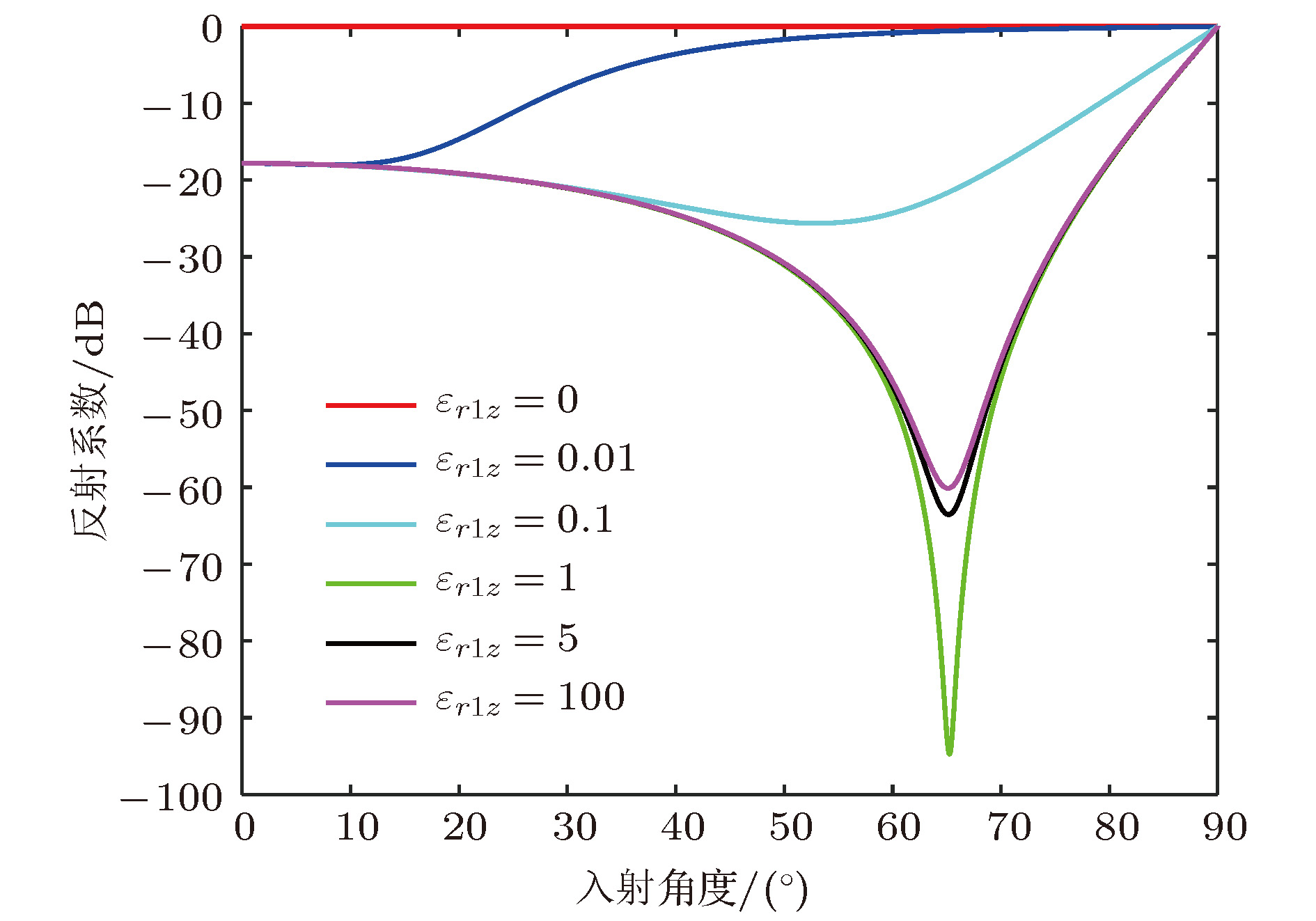
图 5 TM波照射下超材料的反射系数随入射角度和z方向介电常数的关系
Figure 5. The relationship among the reflection coefficient of metamaterials and incident angle and the dielectric constant of z direction under TM wave irradiation.

图 6 超材料吸波体的吸收角度与介质厚度和
${\mu _{r1 x}}$ 虚部的关系Figure 6. The relationship among the absorbing angle of the metamaterial absorber and the substrate thickness and imaginary part of
${\mu _{r1 x}}$ .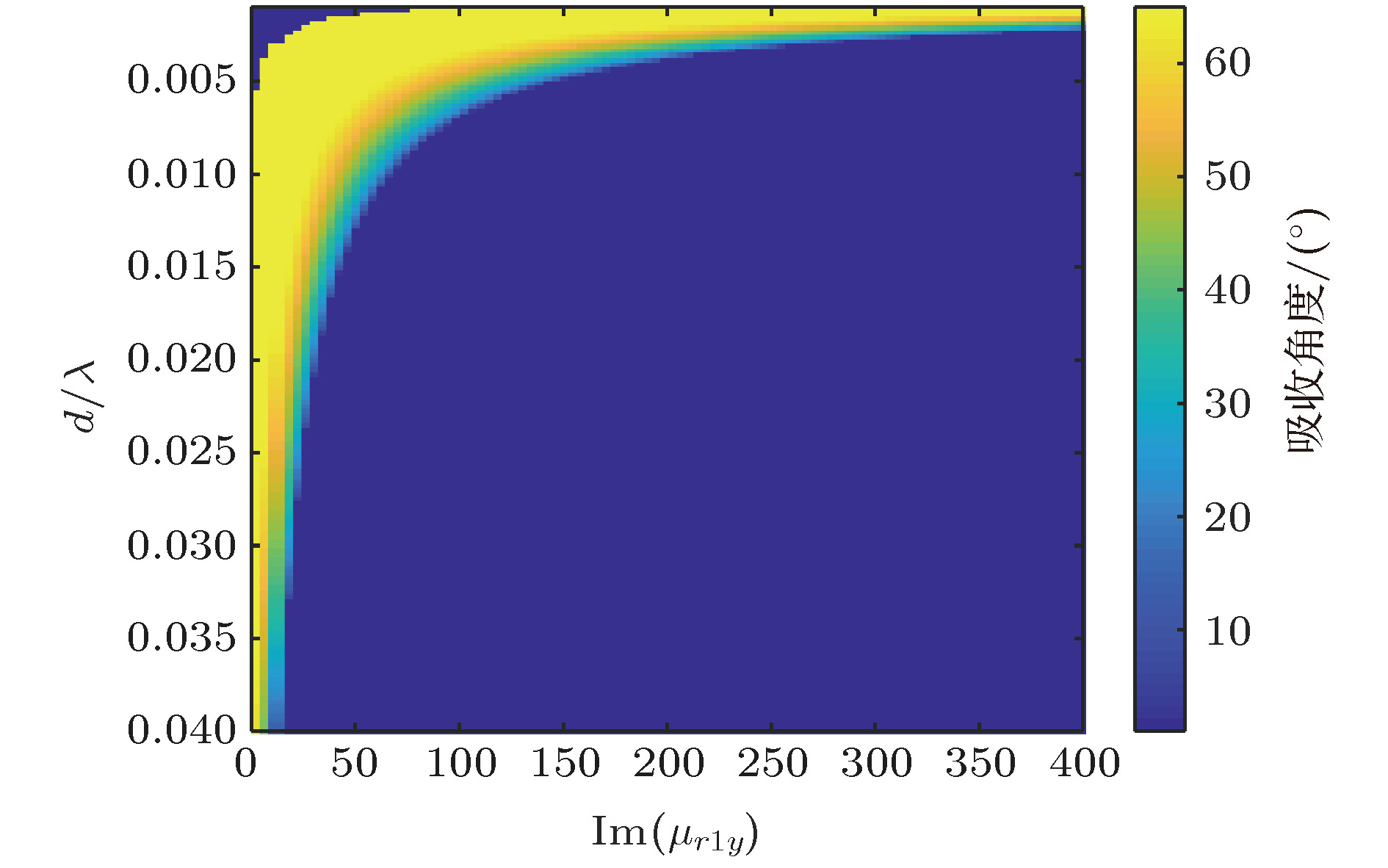
图 7 超材料吸波体吸收角度与介质厚度和
${\mu _{r1 y}}$ 虚部的关系Figure 7. The relationship among the absorbing angle of the metamaterial absorber and the substrate thickness and imaginary part of
${\mu _{r1 y}}$ .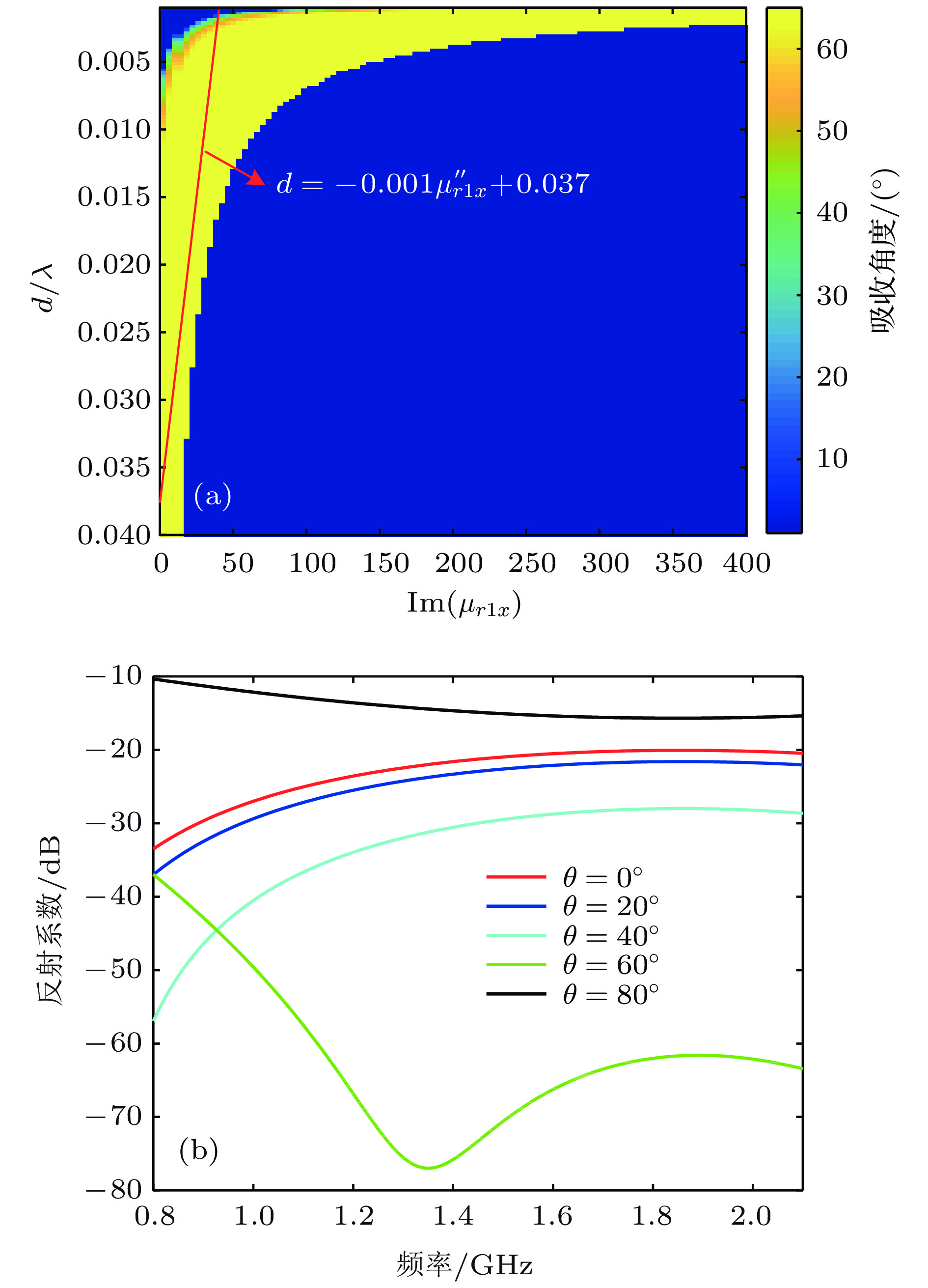
图 8 TE波 (a) 实现宽带化
${\mu _{r1 x}}$ 虚部和d的关系; (b) 带地板色散介质的反射系数随入射角度和频率的变化Figure 8. TE wave: (a) The relationship between imaginary part of
${\mu _{r1 x}}$ and d for achieving broadband; (b) reflection properties of dispersive media backed with ground vary with incidence angle and frequency.
图 9 TM波 (a) 实现宽带化
${\mu _{r1 y}}$ 虚部和d的关系; (b)带地板色散介质的反射性能随入射角度和频率的变化Figure 9. TM wave: (a) The relationship between imaginary part of
${\mu _{r1 y}}$ and d for achieving broadband; (b) reflection properties of dispersive media backed with ground vary with angle of incidence and frequency. -
[1] Fante R L, McCormack M T 1988 IEEE Trans. Antenna. Propag. 36 1443
Google Scholar
[2] Landy N I, Sajuyigbe S, Mock J J, Smith D R, Padilla W J 2008 Phys. Rev. Lett. 100 207402
Google Scholar
[3] Wang B X, Zhai X, Wang G Z, Huang W Q, Wang L L 2015 IEEE Photonics J. 7 4600108
[4] Ding F, Cui X, Ge C, Jin Y, He S L 2012 Appl. Phys. Lett. 100 103506
Google Scholar
[5] Lin X Q, Mei P, Zhang P C, Chen Z Z D, Fan Y 2016 IEEE Trans. Antenna. Propag. 64 4910
Google Scholar
[6] Hao J P, Lheurette E, Burgnies L, Okada E, Lippens D 2014 Appl. Phys. Lett. 105 081102
Google Scholar
[7] Deng T W, Li Z W, Chen Z N 2017 IEEE Trans. Antenna. Propag. 65 5886
Google Scholar
[8] Shang Y P, Shen Z X, Xiao S Q 2013 IEEE Trans. Antenna. Propag. 61 6022
Google Scholar
[9] Rozanov K N 2000 IEEE Trans. Antenna. Propag. 48 1230
Google Scholar
[10] Chen H T 2012 Opt. Express 20 7165
Google Scholar
[11] 顾超, 屈绍波, 裴志斌, 徐卓, 林宝勤, 周航, 柏鹏, 顾巍, 彭卫东, 马华 2011 60 087802
Google Scholar
Gu C, Qu S B, Pei Z B, Xu Z, Lin B Q, Zhou H, Bai P, Gu W, Peng W D, Ma H 2011 Acta Phys. Sin. 60 087802
Google Scholar
[12] 程用志, 聂彦, 龚荣洲, 王鲜 2013 62 044103
Google Scholar
Chen Y Z, Nie Y, Gong R Z, Wang X 2013 Acta Phys. Sin. 62 044103
Google Scholar
[13] 熊益军, 王岩, 王强, 王春齐, 黄小忠, 张芬, 周丁 2018 67 084202
Google Scholar
Xiong Y J, Wang Y, Wang Q, Wang C Q, Huang X Z, Zhang F, Zhou D 2018 Acta Phys. Sin. 67 084202
Google Scholar
[14] 李宇涵, 邓联文, 罗衡, 贺龙辉, 贺君, 徐运超, 黄生祥 2019 68 095201
Google Scholar
Li Y H, Deng L W, Luo H, He L H, He J, Xu Y C, Huang S X 2019 Acta Phys. Sin. 68 095201
Google Scholar
[15] Tao H, Bingham C M, Strikwerda A C, Pilon D, Shrekenhamer D, Landy N I, Fan K, Zhang X, Padilla, Averitt 2008 Phys. Rev. B 78 241103
Google Scholar
[16] Wang B N, Koschny T, Soukouli Costa M 2009 Phys. Rev. B 80 033108
Google Scholar
[17] Lee D, Hwang J G, Lim D, Hara T, Lim S 2016 Sci. Rep. 6 27155
Google Scholar
[18] Nguyen T T, Lim S 2017 Sci. Rep. 7 3204
Google Scholar
[19] Lim D, Lee D, Lim S 2016 Sci. Rep. 6 39686
Google Scholar
[20] Wang J Y, Yang R C, Tian J P, Chen X W, Zhang W M 2018 IEEE Antenna. Wireless Propag. Lett. 17 1242
Google Scholar
[21] Jin Y, Xiao S S, Mortensen N A, He S L 2011 Opt. Express 19 11114
Google Scholar
[22] Feng S M, Halterman K 2012 Phys. Rev. B 86 165103
Google Scholar
[23] Zhong S M, He S L 2013 Sci. Rep. 3 2083
Google Scholar
[24] Chen W C, Bingham C M, Mak K M, Caira N W, Padilla W J 2012 Phys. Rev. B 85 201104
Google Scholar
[25] Li C L, Guo J, Zhang P, Yu Q Q, Ma W T, Miao X G, Zhao Z Y, Luan L 2014 Chin. Phys. Lett. 31 077801
Google Scholar

 DownLoad:


Catalog
Metrics
- Abstract views: 13432
- PDF Downloads: 485
- Cited By: 0
