














-
The development of natural science raises many complex new problems and requires people to find the basic method to resolve them. It was found that many problems could be resolved by building the resistor network model. In 1845, the German scientist Kirchhoff set up the node current law and the circuit voltage law.Since then the basic theory of electric circuit has been established. At present, three general theories for studying large-scale resistor networks have been developed, for example, In 2000 Cserti [Am. J. Phys. 2000, 68 , 896] set up the Green function technique to evaluate the resistance of infinite lattices. In 2004 Wu [J. Phys. A: Math. Gen. 2014, 37 , 6653] formulated a Laplacian matrix method and calculated the resistance of arbitrary finite and infinite lattices by using the eigenvalues and eigenvectors. In 2011 Tan [Resistance Network Model (Xi’an: Xidian University Press) 2011, pp16–216] proposed the recursion-transform (RT) method which depends on the one matrix along one directions and avoids the trouble of the Laplacian method that depends on two matrices along two directions. Among them, only two theories can calculate both finite and infinite networks. One is Wu's Laplacian matrix method and the other is Tan's RT method. However, there is only one way to compute a resistor network with arbitrary boundary, that is, the Tan's RT method. Potential distribution problem in arbitrary rectangular circuit network has always been a problem of scientific research. In this paper, we develop the RT-I theory of resistor networks to calculate the arbitrary m × n circuit network model. We study the potential distribution and the equivalent resistance of a class of m × n rectangular network with an arbitrary boundary, a profound problem that has not been resolved so far, because previous research depends on the boundary conditions of rules or a zero-resistance boundary condition. Other methods, such as Green function technique and Laplacian method to calculate potential function are difficult and also impossible to study the resistor network with arbitrary boundary. Potential function problem is an important research subject in natural science and engineering technology, for example, the solution of Laplace's equation is one of research work. In this paper, we present an analytical expression of the node potential function of m × n rectangular resistor network with an arbitrary boundary, and also obtainan equivalent resistance formula between any two nodes, and the results in some special cases as well. In the comparative study of different results, a new mathematical identity and several interesting inferences are discovered. -
Keywords:
- complex networks /
- recursion-transform theory /
- matrix equation /
- potential function /
- boundary conditions /
- fraction identity
[1] Kirkpatrick S 1973 Rev. Mod. Phys. 45 574
 Google Scholar
[2] Melnikov A V, Shuba M, Lambin P 2018 Phys. Rev. E 97 043307
Google Scholar
[3] Cserti J 2000 Am. J. Phys. 68 896
Google Scholar
[4] Cserti J, David G, Piroth A 2002 Am. J. Phys. 70 153
Google Scholar
[5] Cserti J, Szechenyi G, David G 2011 J. Phys. A: Math. Theor. 44 215201
Google Scholar
[6] 梁昆淼, 刘法, 缪国庆 1998 数学物理方法 (北京: 高等教育出版社) 第459−467页
Liang K M, Liu F, Miao G Q 1998 Mathematical Physics Methods (Beijing: Higher Education Press) pp459−467 (in Chinese)
[7] Asad J H, Diab A A, Hijjawi R S, Khalifeh J M 2013 Eur. Phys. J. Plus 128 1
Google Scholar
[8] Asad J H 2013 J. Stat. Phys. 150 1177
Google Scholar
[9] Owaidat M Q, Hijjawi R S, Khalifeh J M 2014 Eur. Phys. J. Plus 129 29
Google Scholar
[10] Owaidat M Q, Asad J H, Tan Z Z 2016 Int. J. Mod. Phys. B 30 1650166
Google Scholar
[11] Owaidat M Q, Al-Badawi A A, Asad J H, Al-Twiessi M 2018 Chin. Phys. Lett. 35 020502
Google Scholar
[12] Owaidat M Q, Asad J H 2016 Eur. Phys. J. Plus 131 309
Google Scholar
[13] Wu F Y 2004 J. Phys. A: Math. Gen. 37 6653
Google Scholar
[14] Tzeng W J, Wu F Y 2006 J. Phys. A: Math. Gen. 39 8579
Google Scholar
[15] Izmailian N S, Huang M C 2010 Phys. Rev. E 82 011125
Google Scholar
[16] Essam J W, Wu F Y 2009 J. Phys. A: Math. Theor. 42 025205
Google Scholar
[17] Chair N 2012 Ann. Phys. 327 3116
Google Scholar
[18] Chair N 2014 Ann. Phys. 341 56
Google Scholar
[19] Chair N 2014 J. Stat. Phys. 154 1177
Google Scholar
[20] Izmailian N S, Kenna R, Wu F Y 2014 J. Phys. A: Math. Theor. 47 035003
Google Scholar
[21] Izmailian N S, Kenna R 2014 J. Stat. Mech. E 09 1742
[22] Izmailian N S, Kenna R 2015 Chin. J. Phys. 53 040703
[23] Essam J W, Izmailyan N S, Kenna R, Tan Z Z 2015 Roy. Soc. Open Sci. 2 140420
Google Scholar
[24] 谭志中 2011 电阻网络模型 (西安: 西安电子科技大学出版社) 第16—216页
Tan Z Z 2011 Resistance Network Model (Xi’an: Xidian University Press) pp16–216 (in Chinese)
[25] Tan Z Z, Zhou L, Yang J H 2013 J. Phys. A: Math. Theor. 46 195202
Google Scholar
[26] Tan Z Z, Essam J W, Wu F Y 2014 Phys. Rev. E 90 012130
Google Scholar
[27] Essam J W, Tan Z Z, Wu F Y 2014 Phys. Rev. E 90 032130
Google Scholar
[28] Tan Z Z 2015 Chin. Phys. B 24 020503
Google Scholar
[29] Tan Z Z 2015 Phys. Rev. E 91 052122
[30] Tan Z Z 2015 Sci. Rep. 5 11266
Google Scholar
[31] Tan Z Z 2015 Int. J. Circ. Theor. Appl. 43 1687
Google Scholar
[32] Tan Z Z, Zhang Q H 2015 Int. J. Circ. Theor. Appl. 43 944
Google Scholar
[33] Tan Z Z 2016 Chin. Phys. B 25 050504
Google Scholar
[34] 谭志中, 张庆华 2017 66 070501
Google Scholar
Tan Z Z, Zhang Q H 2017 Acta Phys. Sin. 66 070501
Google Scholar
[35] Tan Z Z 2017 Chin. Phys. B 26 090503
Google Scholar
[36] Tan Z, Tan Z Z, Chen J X 2018 Sci. Rep. 8 5798
Google Scholar
[37] Tan Z Z, Asad J H, Owaidat M Q 2017 Int. J. Circ. Theor. Appl. 45 1942
Google Scholar
[38] Zhou L, Tan Z Z, Zhang Q H 2017 Front. Inf. Technol. Electron. Eng. 18 1186
Google Scholar
[39] Tan Z, Tan Z Z, Asad J H, Owaidat M Q 2019 Phys. Scripta 94 055203
Google Scholar
[40] Tan Z Z, Zhu H, Asad J H, Xu C, Tang H 2017 Front. Inf. Technol. Electron. Eng. 18 2070
Google Scholar
[41] Tan Z, Tan Z Z, Zhou L 2018 Commun. Theor. Phys. 69 610
Google Scholar
[42] Tan Z, Tan Z Z 2018 Sci. Rep. 8 9937
Google Scholar
[43] Tan Z Z 2017 Commun. Theor. Phys. 67 280
Google Scholar
-

图 1 含有一个任意边界的矩形电阻网络, 右边界上的任意电阻为r1, 其他在水平和竖直方向的电阻元素分别为r和r0
Figure 1. An arbitrary rectangular m × n resistor network with an arbitrary boundary. Bonds in the horizontal and vertical directions are resistors r and r0 except for r1 on the right boundary.
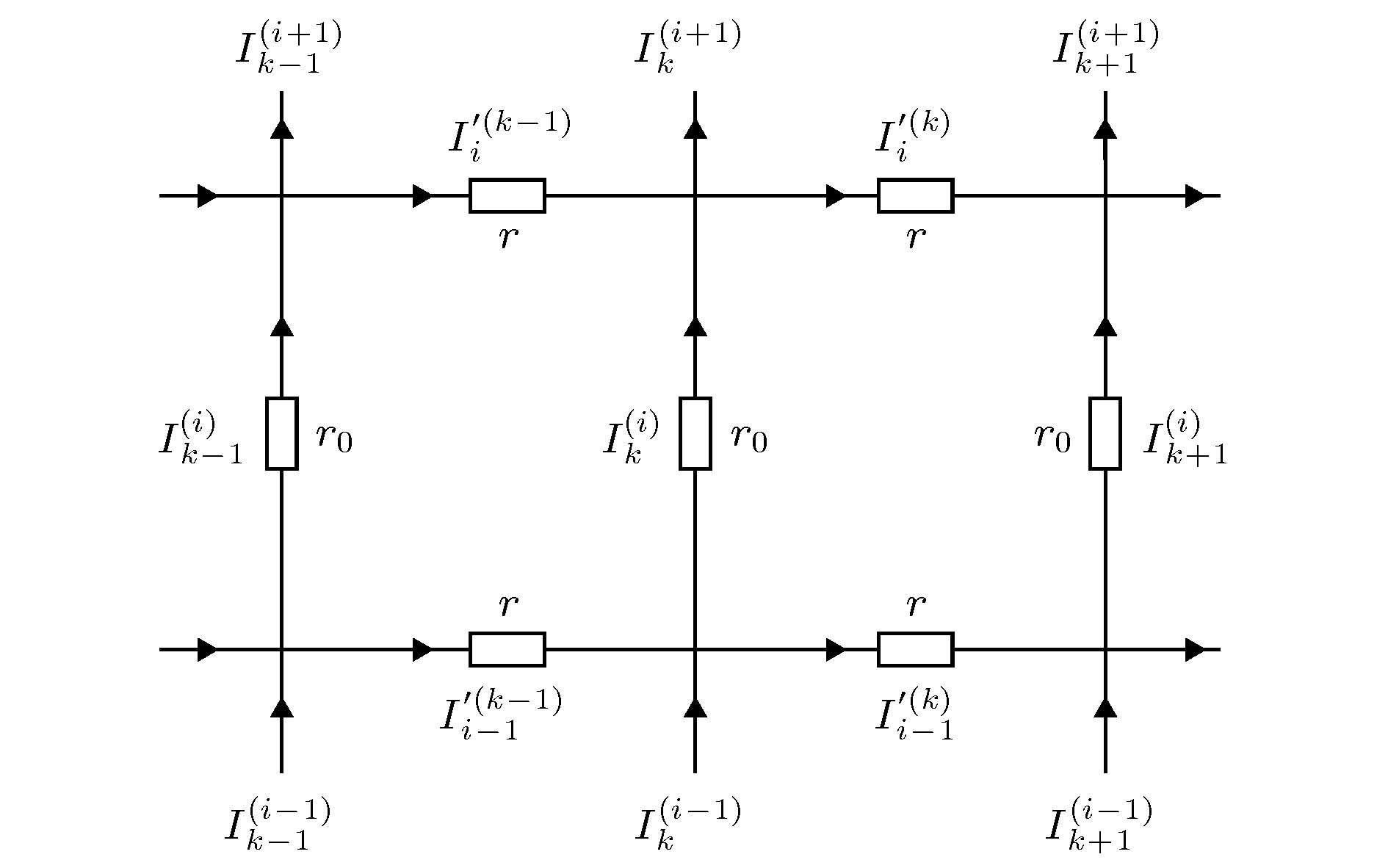
图 2 含有电流参数和方向的部分电阻网络
Figure 2. Segment of resistor network with current directions and parameters.
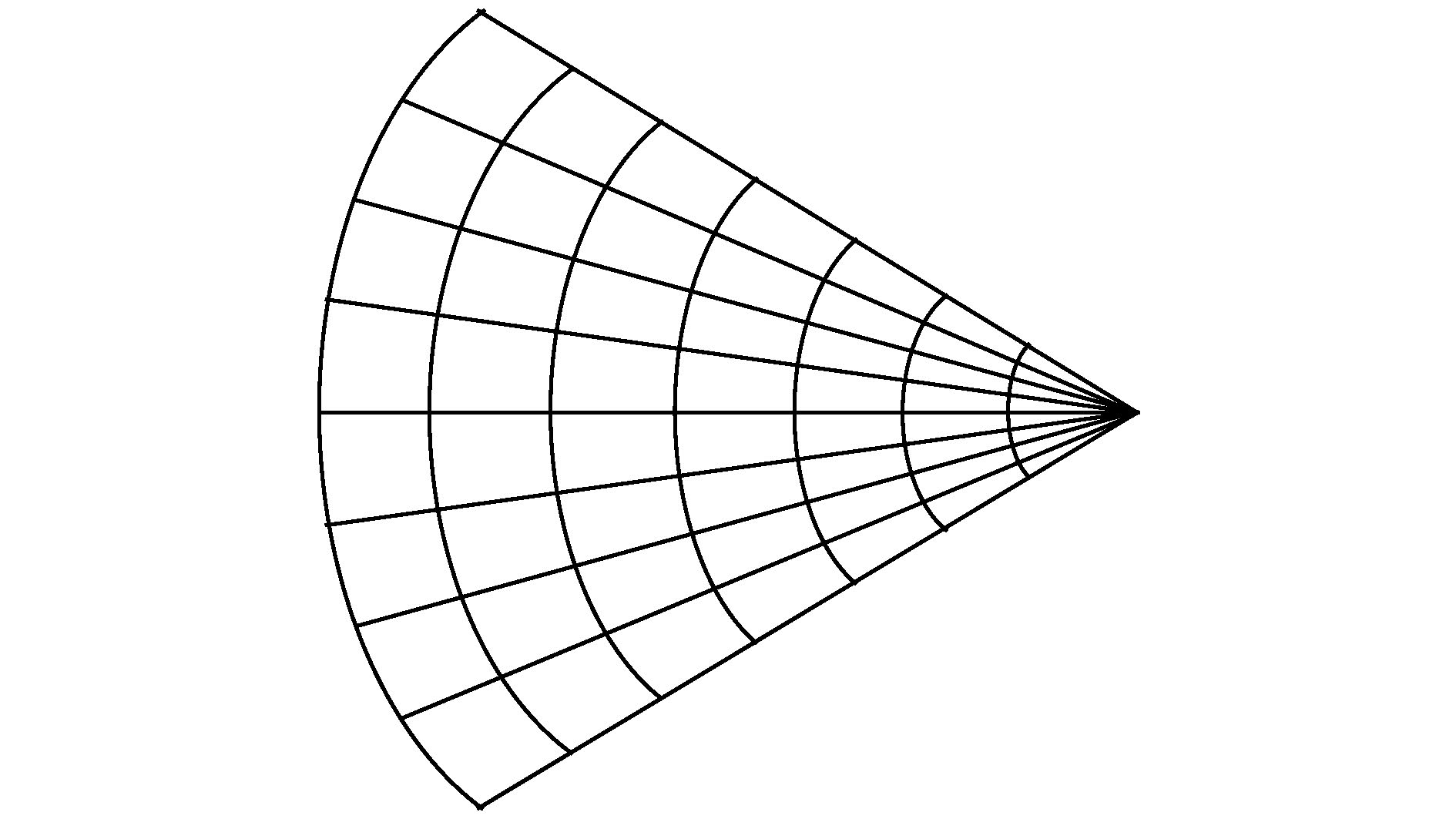
图 3 一类任意m × n阶Fan电阻网络模型
Figure 3. An arbitrary m × n Fan resistor network.
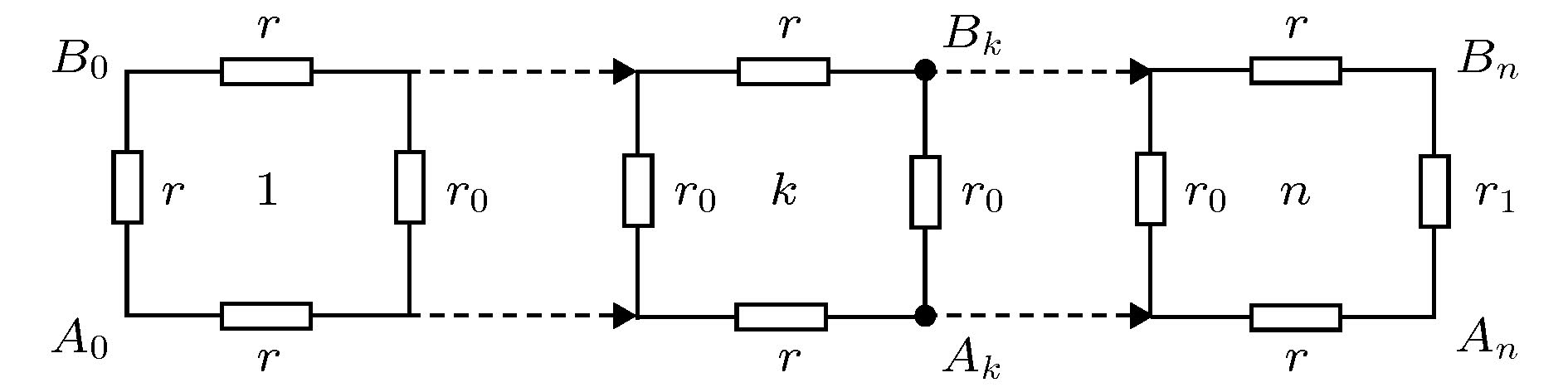
图 4 一类含有任意右边界的1 × n阶电阻网络
Figure 4. 1 × n resistor network with an arbitrary right boundary.
-
[1] Kirkpatrick S 1973 Rev. Mod. Phys. 45 574
Google Scholar
[2] Melnikov A V, Shuba M, Lambin P 2018 Phys. Rev. E 97 043307
Google Scholar
[3] Cserti J 2000 Am. J. Phys. 68 896
Google Scholar
[4] Cserti J, David G, Piroth A 2002 Am. J. Phys. 70 153
Google Scholar
[5] Cserti J, Szechenyi G, David G 2011 J. Phys. A: Math. Theor. 44 215201
Google Scholar
[6] 梁昆淼, 刘法, 缪国庆 1998 数学物理方法 (北京: 高等教育出版社) 第459−467页
Liang K M, Liu F, Miao G Q 1998 Mathematical Physics Methods (Beijing: Higher Education Press) pp459−467 (in Chinese)
[7] Asad J H, Diab A A, Hijjawi R S, Khalifeh J M 2013 Eur. Phys. J. Plus 128 1
Google Scholar
[8] Asad J H 2013 J. Stat. Phys. 150 1177
Google Scholar
[9] Owaidat M Q, Hijjawi R S, Khalifeh J M 2014 Eur. Phys. J. Plus 129 29
Google Scholar
[10] Owaidat M Q, Asad J H, Tan Z Z 2016 Int. J. Mod. Phys. B 30 1650166
Google Scholar
[11] Owaidat M Q, Al-Badawi A A, Asad J H, Al-Twiessi M 2018 Chin. Phys. Lett. 35 020502
Google Scholar
[12] Owaidat M Q, Asad J H 2016 Eur. Phys. J. Plus 131 309
Google Scholar
[13] Wu F Y 2004 J. Phys. A: Math. Gen. 37 6653
Google Scholar
[14] Tzeng W J, Wu F Y 2006 J. Phys. A: Math. Gen. 39 8579
Google Scholar
[15] Izmailian N S, Huang M C 2010 Phys. Rev. E 82 011125
Google Scholar
[16] Essam J W, Wu F Y 2009 J. Phys. A: Math. Theor. 42 025205
Google Scholar
[17] Chair N 2012 Ann. Phys. 327 3116
Google Scholar
[18] Chair N 2014 Ann. Phys. 341 56
Google Scholar
[19] Chair N 2014 J. Stat. Phys. 154 1177
Google Scholar
[20] Izmailian N S, Kenna R, Wu F Y 2014 J. Phys. A: Math. Theor. 47 035003
Google Scholar
[21] Izmailian N S, Kenna R 2014 J. Stat. Mech. E 09 1742
[22] Izmailian N S, Kenna R 2015 Chin. J. Phys. 53 040703
[23] Essam J W, Izmailyan N S, Kenna R, Tan Z Z 2015 Roy. Soc. Open Sci. 2 140420
Google Scholar
[24] 谭志中 2011 电阻网络模型 (西安: 西安电子科技大学出版社) 第16—216页
Tan Z Z 2011 Resistance Network Model (Xi’an: Xidian University Press) pp16–216 (in Chinese)
[25] Tan Z Z, Zhou L, Yang J H 2013 J. Phys. A: Math. Theor. 46 195202
Google Scholar
[26] Tan Z Z, Essam J W, Wu F Y 2014 Phys. Rev. E 90 012130
Google Scholar
[27] Essam J W, Tan Z Z, Wu F Y 2014 Phys. Rev. E 90 032130
Google Scholar
[28] Tan Z Z 2015 Chin. Phys. B 24 020503
Google Scholar
[29] Tan Z Z 2015 Phys. Rev. E 91 052122
[30] Tan Z Z 2015 Sci. Rep. 5 11266
Google Scholar
[31] Tan Z Z 2015 Int. J. Circ. Theor. Appl. 43 1687
Google Scholar
[32] Tan Z Z, Zhang Q H 2015 Int. J. Circ. Theor. Appl. 43 944
Google Scholar
[33] Tan Z Z 2016 Chin. Phys. B 25 050504
Google Scholar
[34] 谭志中, 张庆华 2017 66 070501
Google Scholar
Tan Z Z, Zhang Q H 2017 Acta Phys. Sin. 66 070501
Google Scholar
[35] Tan Z Z 2017 Chin. Phys. B 26 090503
Google Scholar
[36] Tan Z, Tan Z Z, Chen J X 2018 Sci. Rep. 8 5798
Google Scholar
[37] Tan Z Z, Asad J H, Owaidat M Q 2017 Int. J. Circ. Theor. Appl. 45 1942
Google Scholar
[38] Zhou L, Tan Z Z, Zhang Q H 2017 Front. Inf. Technol. Electron. Eng. 18 1186
Google Scholar
[39] Tan Z, Tan Z Z, Asad J H, Owaidat M Q 2019 Phys. Scripta 94 055203
Google Scholar
[40] Tan Z Z, Zhu H, Asad J H, Xu C, Tang H 2017 Front. Inf. Technol. Electron. Eng. 18 2070
Google Scholar
[41] Tan Z, Tan Z Z, Zhou L 2018 Commun. Theor. Phys. 69 610
Google Scholar
[42] Tan Z, Tan Z Z 2018 Sci. Rep. 8 9937
Google Scholar
[43] Tan Z Z 2017 Commun. Theor. Phys. 67 280
Google Scholar


 DownLoad:
Catalog
Metrics
- Abstract views: 12362
- PDF Downloads: 206
- Cited By: 0
